

IRIS VAN HERPEN: SCULPTING THE SENSES
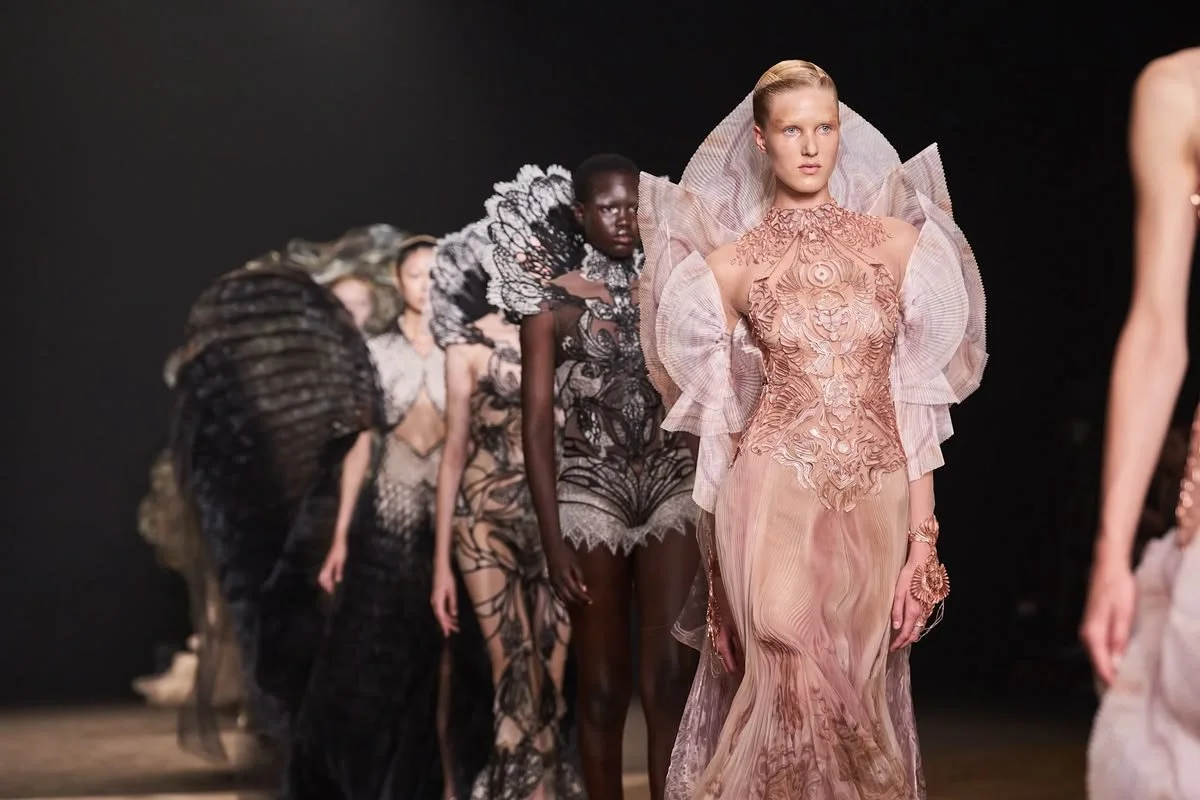
When Fashion Becomes Living Architecture
There are fashion exhibitions… and then there are experiences that permanently change how you understand clothing.
The upcoming Iris van Herpen: Sculpting the Senses exhibition at the Brooklyn Museum is firmly in the second category.
Marking the North American debut of the internationally celebrated show, the presentation introduces New York to one of the most visionary couture designers working today. For anyone interested in fashion, art, technology, or even science, this exhibition feels less like a retrospective and more like stepping into the future.
A Designer Who Doesn’t Make Clothes — She Builds Environments
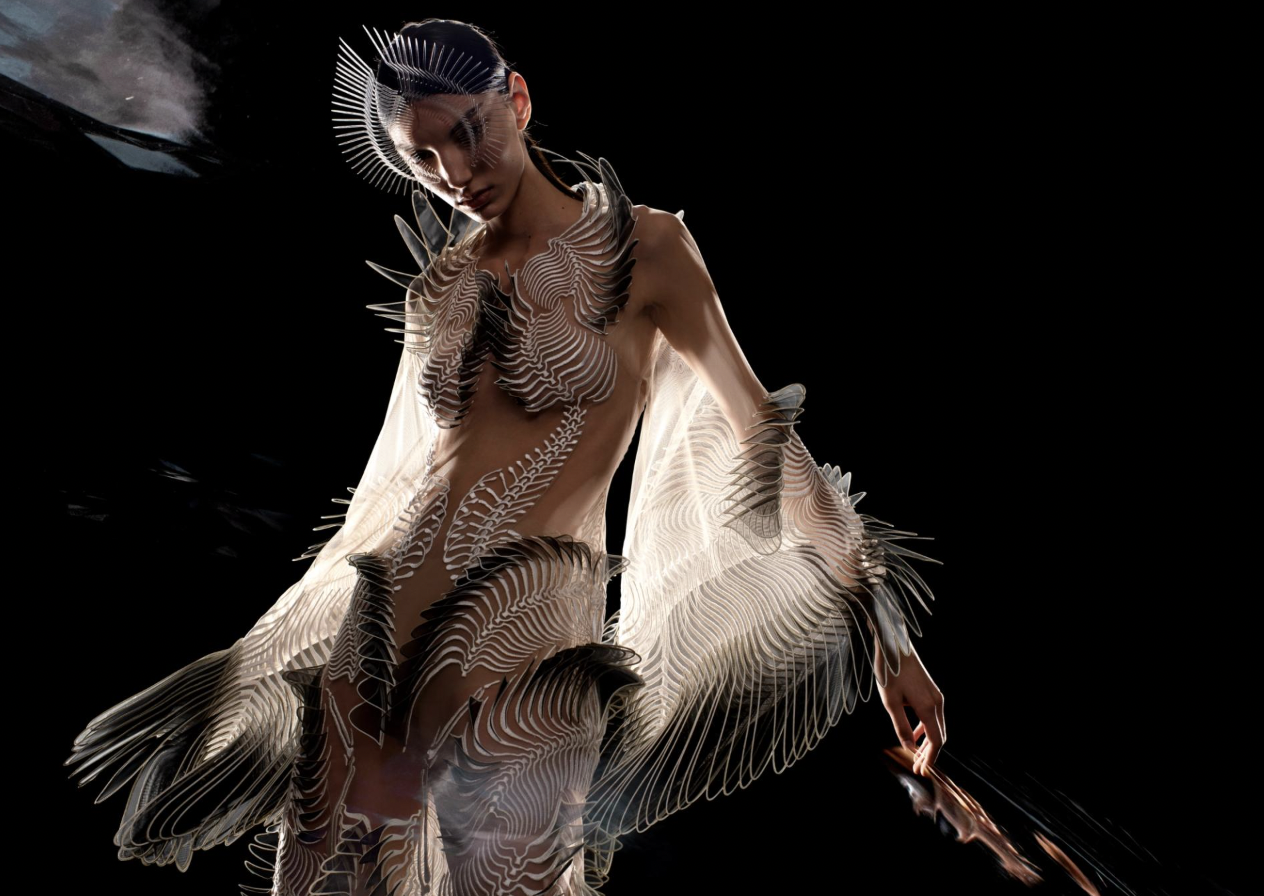
Dutch designer Iris van Herpen has never approached fashion as something that simply sits on the body. Instead, she treats the body as a moving structure within a larger system — one that interacts with gravity, sound, light, water, and even perception.
Her gowns don’t drape.
They orbit.
Van Herpen’s work combines:
traditional haute couture handwork
experimental materials
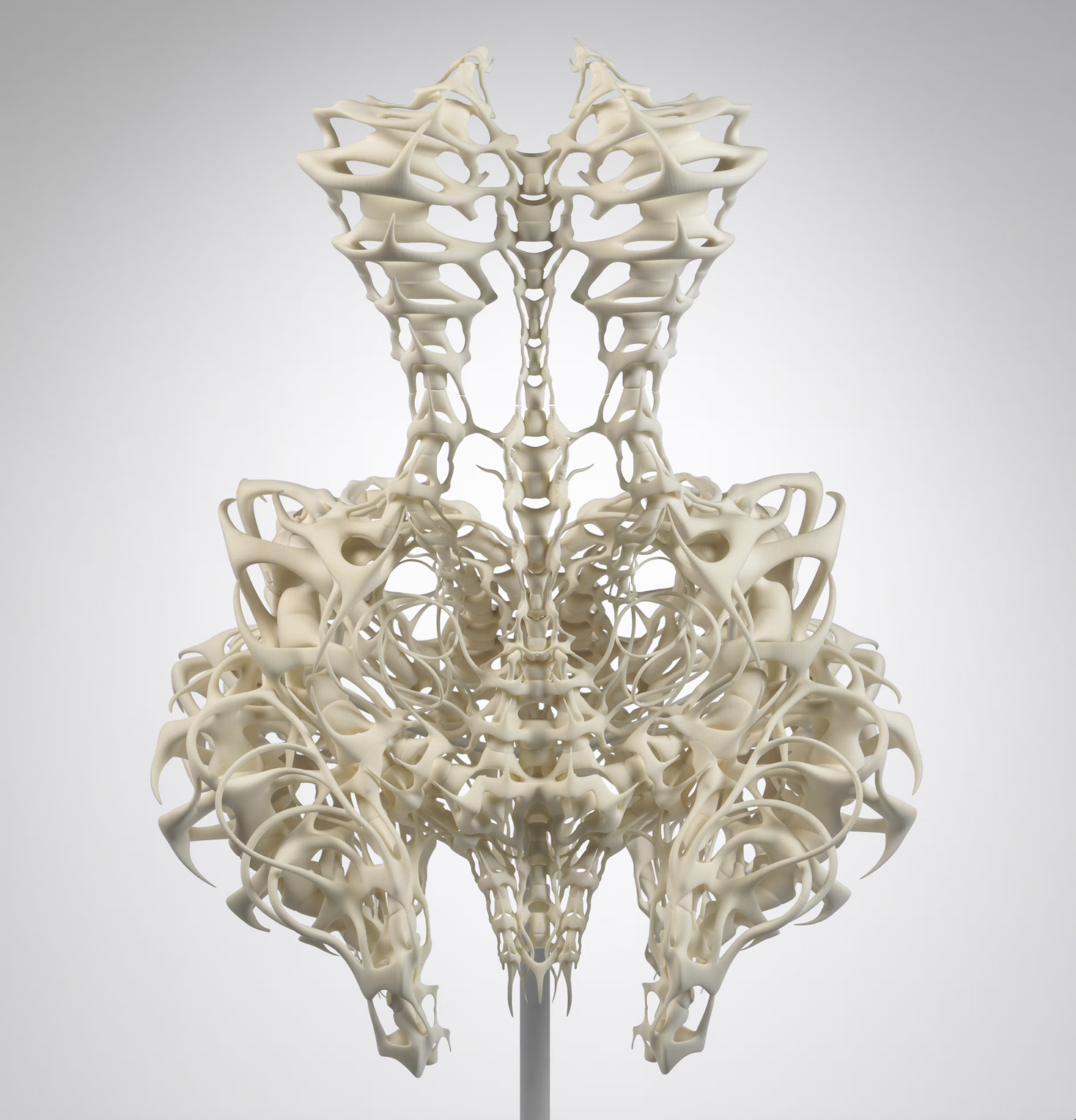
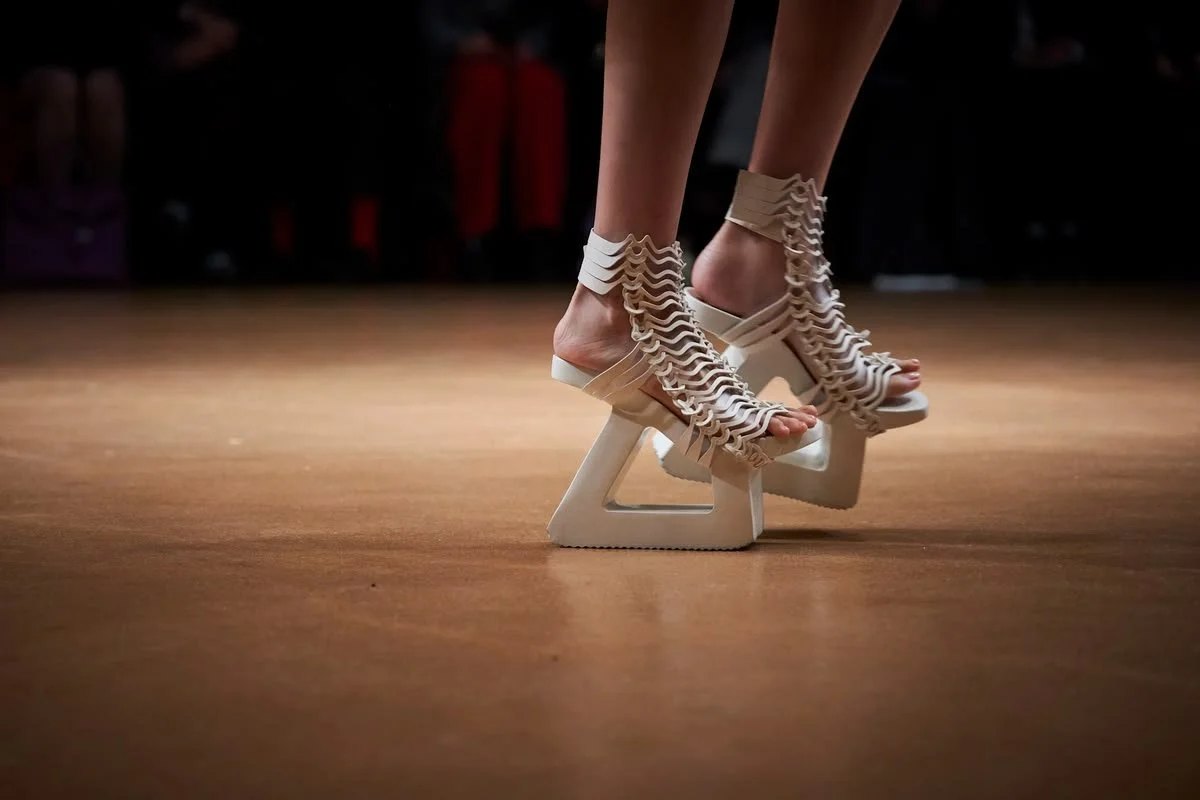
3D printing and laser cutting
physics and mathematics
biological research
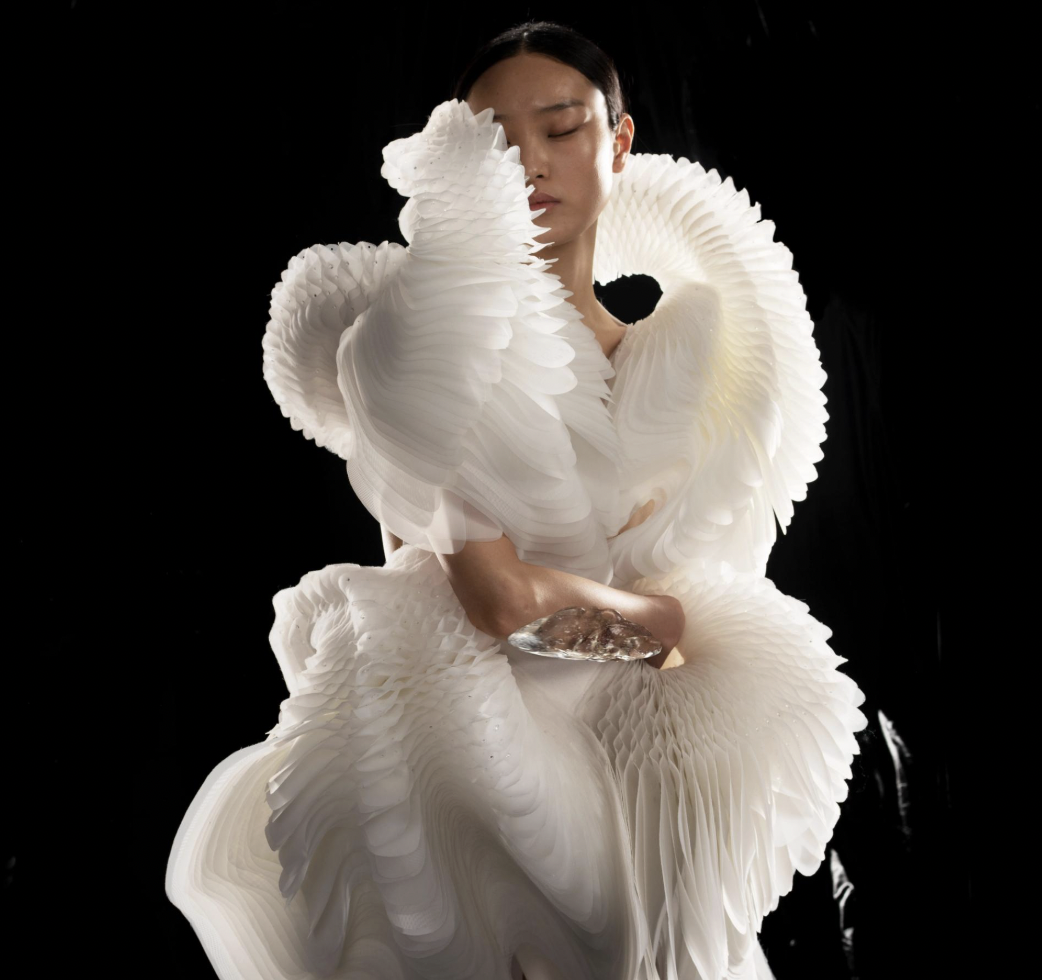
The result: garments that resemble marine organisms, cosmic formations, skeletal structures, and microscopic cells all at once.
Celebrities including Beyoncé, Björk, Lady Gaga, Cate Blanchett, and Ariana Grande have worn her designs, but on a museum floor the pieces feel less like red-carpet fashion and more like kinetic sculptures.
What the Exhibition Explores
More than 140 haute couture works are presented alongside contemporary art, scientific artifacts, and natural history objects. You’ll encounter coral, fossils, skeletal forms, and kinetic installations in dialogue with the gowns.
The exhibition moves through themes that connect fashion to science:
The Body in Space
Garments extend beyond silhouette, creating halos, ripples, and force fields around the wearer. The body becomes part of an ecosystem rather than the center of it.
Motion & Physics
Some dresses appear frozen mid-movement — as if water splashed and solidified. Others mimic air currents, wave patterns, and resonance frequencies.
Nature & Biomimicry
Van Herpen often studies organisms like jellyfish, shells, and cellular growth patterns. Fractal geometry and natural mathematics directly influence the construction of her couture.
Perception & Neuroscience
Lighting, sound, and spatial installation influence how visitors experience the pieces. Composer Salvador Breed’s soundscape transforms the exhibition into a multisensory environment rather than a traditional gallery.
Why This Matters in 21st-Century Fashion
This show quietly explains something important:
Fashion is no longer only about trend — it’s about research.
Van Herpen works with:
architects
engineers
scientists
digital technologists
material researchers
Instead of seasonal collections reacting to culture, her work anticipates culture. Many techniques she pioneered — especially 3D-printed couture — are already influencing athletic wear, medical textiles, wearable technology, and sustainable materials.
In other words, the exhibition isn’t just showing dresses.
It’s showing prototypes of the future.
The Art & Science Collaboration
The museum intentionally places her work beside artists and designers whose practices intersect with science, including kinetic sculptors, photographers, architects, and installation artists.
This curatorial decision highlights something central to Van Herpen’s creative process: she doesn’t merely take inspiration from nature — she collaborates with disciplines that study it. Fossils, coral structures, fluid simulations, and mathematical modeling all inform how a gown is engineered.
The exhibition becomes a conversation between:
couture
contemporary art
natural history
scientific discovery
A Journey From Ocean Depths to Outer Space
Visitors move through environments evoking water currents, atmospheric movement, and cosmic expansion. The narrative begins in organic life — oceanic, cellular, and skeletal — and gradually expands outward into light, sound, and the universe.
It mirrors a simple idea:
Human clothing is not separate from nature. It is an extension of it.
Van Herpen’s dresses often appear alive — breathing, vibrating, or growing — reminding viewers that the human body itself is biological architecture.
Visiting the Exhibition
Location: 5th Floor galleries (Schapiro Wing and Cantor Gallery) at the Brooklyn Museum
Timed tickets required
First major New York presentation of the designer’s work
Hashtag: #IrisvanHerpenBkM
Why You Should Go
Even if you’re not a fashion person, this is the rare exhibition where multiple audiences meet: art lovers, designers, photographers, scientists, and architecture enthusiasts.
You leave with a different understanding of clothing — not as decoration, but as a living interface between humans and their environment.
Van Herpen’s central message becomes clear by the end:
The future of fashion isn’t fabric.
It’s perception.