

OKUDA SAN MIGUEL INTERVIEW
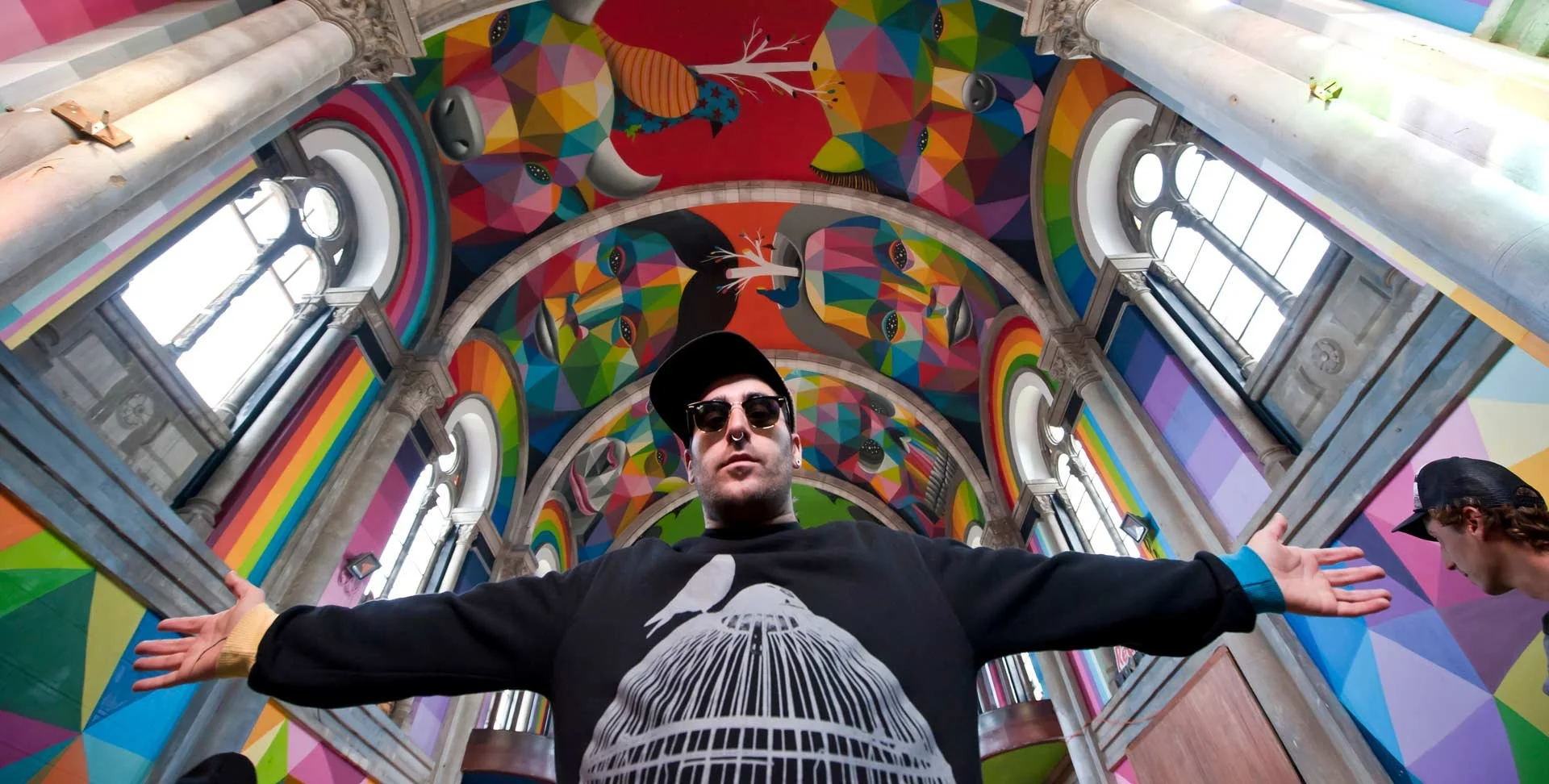
““I like to reach the space that I will intervene without any preconceived ideas, and get inspired by the environment and the forms of the building itself.””
Your vibrant geometric creations have transformed walls, buildings, and public spaces across the globe. Looking back, what has your creative journey been like, and how did you first discover your passion for art and develop the distinctive visual language that has become your signature?
In the city I was born, Santander, I started to draw when I was 10 or 11 years old in sketchbooks during random classes. My first references I saw in my city were two walls by Afro, Reno and Maes. At the same time, I was studying art in high school and I got more and more inspired by surrealist artists like Dali, Magritte, and Ernst. That motivated me to draw letters. Around ’97 I joined my first graffiti crew, called Jungle Jonky, with 2X, Cdd and Cbx. We started painting in old factories and on lost railway walls. In 2000 I moved to Madrid and started a fine arts degree at Complutense University. Around the same time I started to travel to some international street art events.
I get inspiration from Dali, Ernst, Magritte, Murakami, Jodorowsky and Yayoi Kusama… but the king is The Bosch. And I like artists like Kris Kuksi, Osgemeos, Tomokazu Matsuyama, Kaws, Eric Parker, Todd James, Interesni Kazki, Piet Parra, Smithe, Nano4814, Sixe Paredes, San, Cleon Peterson, Amandine Urruti… Some of those are friends and they motivate me to grow and work harder. My art also has relations to old cultures like the Wicholes, Mayans, Incas, Native or African cultures.
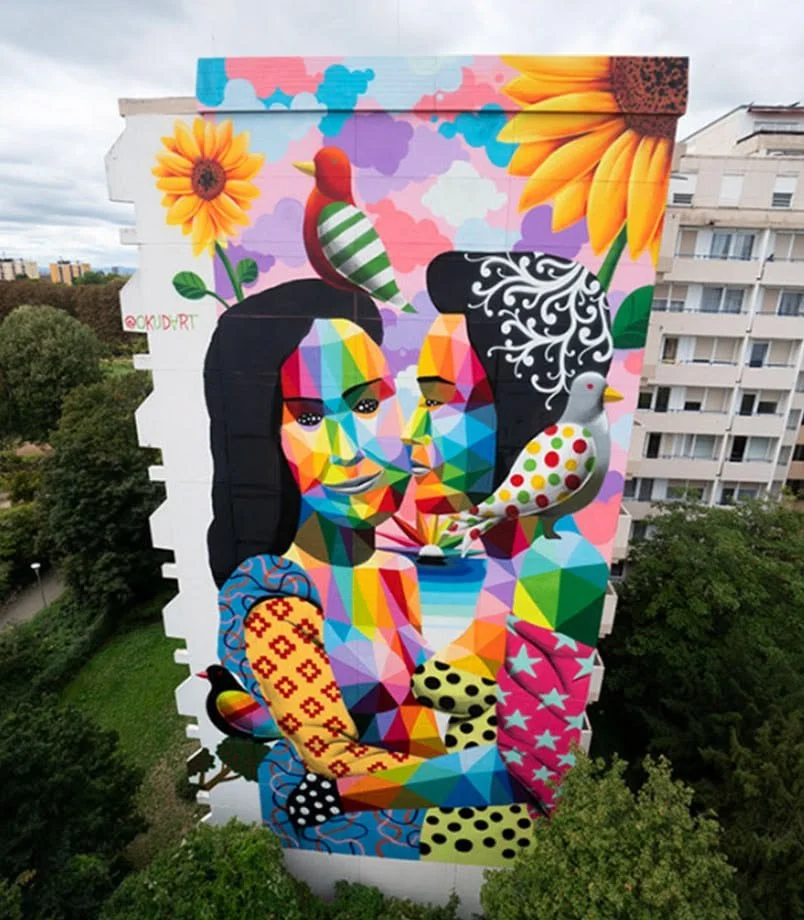
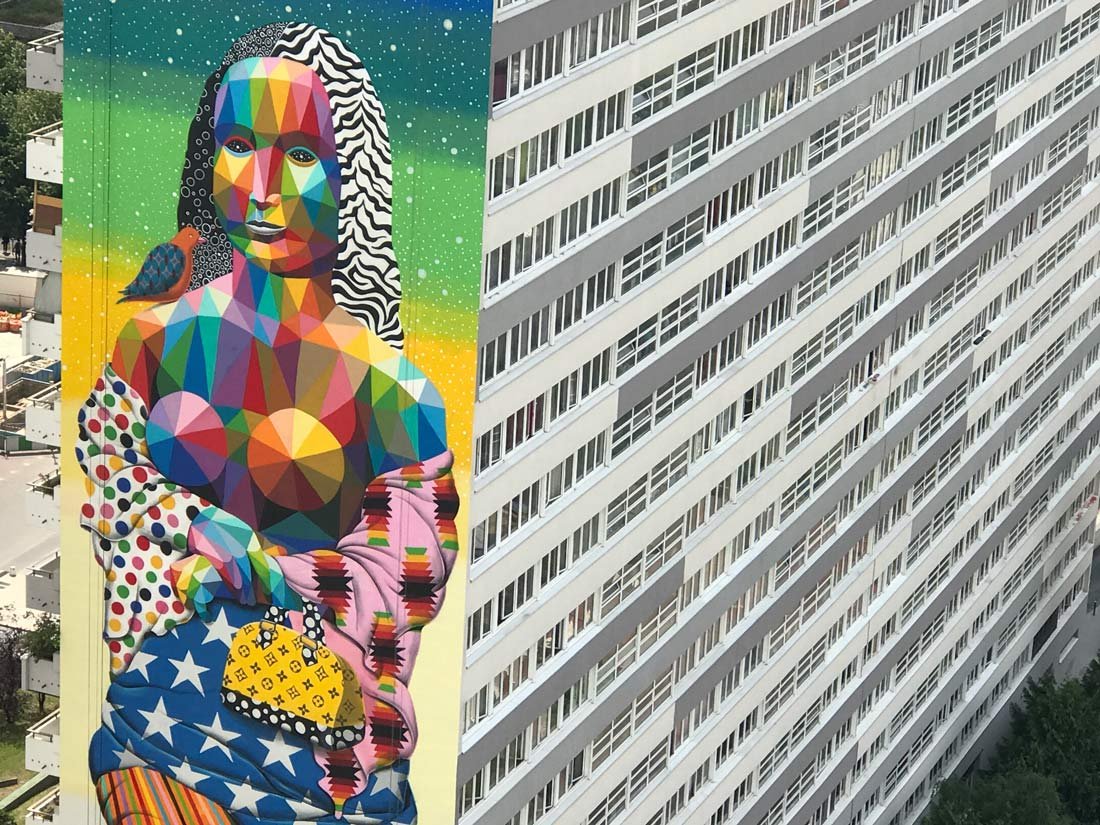
One of your most ambitious projects was transforming a nineteen-story building in Paris into a monumental work of art. What was that experience like, and how did working on such a massive scale challenge you both creatively and technically compared to your previous projects?
It was very special and a bit more difficult because the flying scaffolding didn’t let me see the whole wall from far away like with the regular lifts I normally use. The balcony was my only reference to sketch it on the wall. But after that, we really enjoyed working on the details in the highest areas. It made me feel free, like flying over the clouds. It was very inspirational. And the communication with the neighbors who could see our work from their windows was fun.
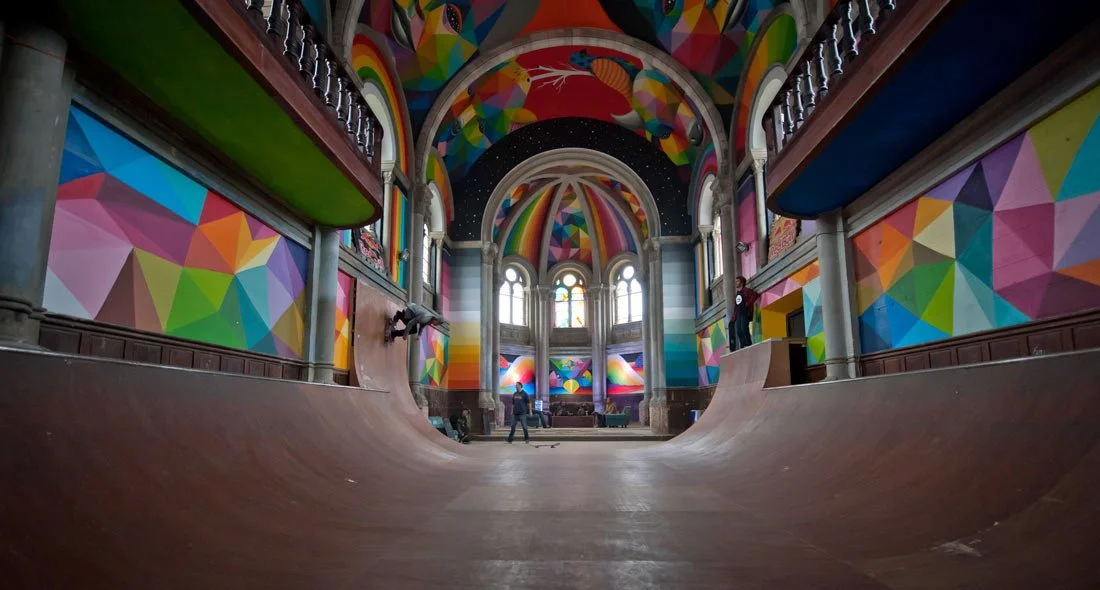
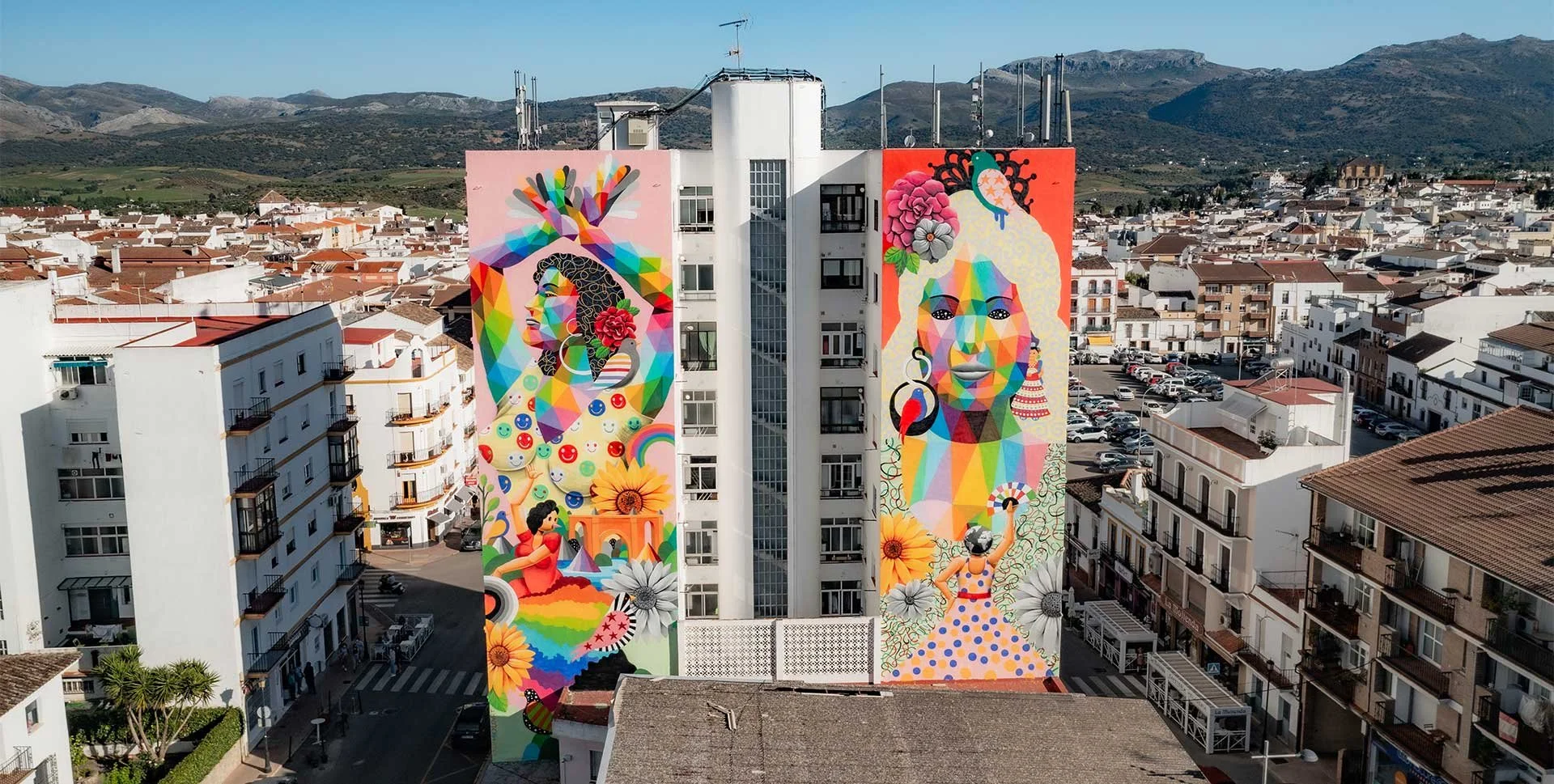
Your transformation of the Church of Cannabis in Denver was a fascinating fusion of contemporary art, architecture, and spirituality. How did this unique project come about, and what inspired your creative vision for such an unconventional and thought-provoking space?
I usually do not make sketches, I just point out ideas of compositions or concepts. I like to reach the space that I will intervene without any preconceived ideas, and get inspired by the environment and the forms of the building itself. In this case, it was so, and I started to draw the main lines in each of the parts, in a way it is as if I read what I should do in each place of the church according to the architectural forms. There is a skull on the altar and I also made only two heads of bears and bulls. I took a more abstract approach to the other roof but all were united by a series of eyes of the universe that goes along with the lamps (the lights that illuminate the place come directly from the eyes of the universe). We had a very familiar coexistence with the whole team of the church. We slept in rooms that were on the first floor. We curiously saw the whole church through a window from the bed, so we slept thinking about what was the next step when waking up. We felt at home, as a family, we walked the dog and even played football in a park. It was very cool! In addition, this place has become kind of a museum, social and cultural center where I could only see and enjoy the actions and concerts of the opening. It was very amazing how music interacts with the place, with the paintings, with people and with perceptions and sensations of the marijuana. Besides that, the acoustic is spectacular. I felt a very good energy, love, and peace of the people.
Your bold geometric style and vibrant use of color have become instantly recognizable. How did you develop this distinctive visual language, and what role does color play in your creative process? Do the colors you choose carry a particular emotional or symbolic meaning, or are they guided more by intuition?
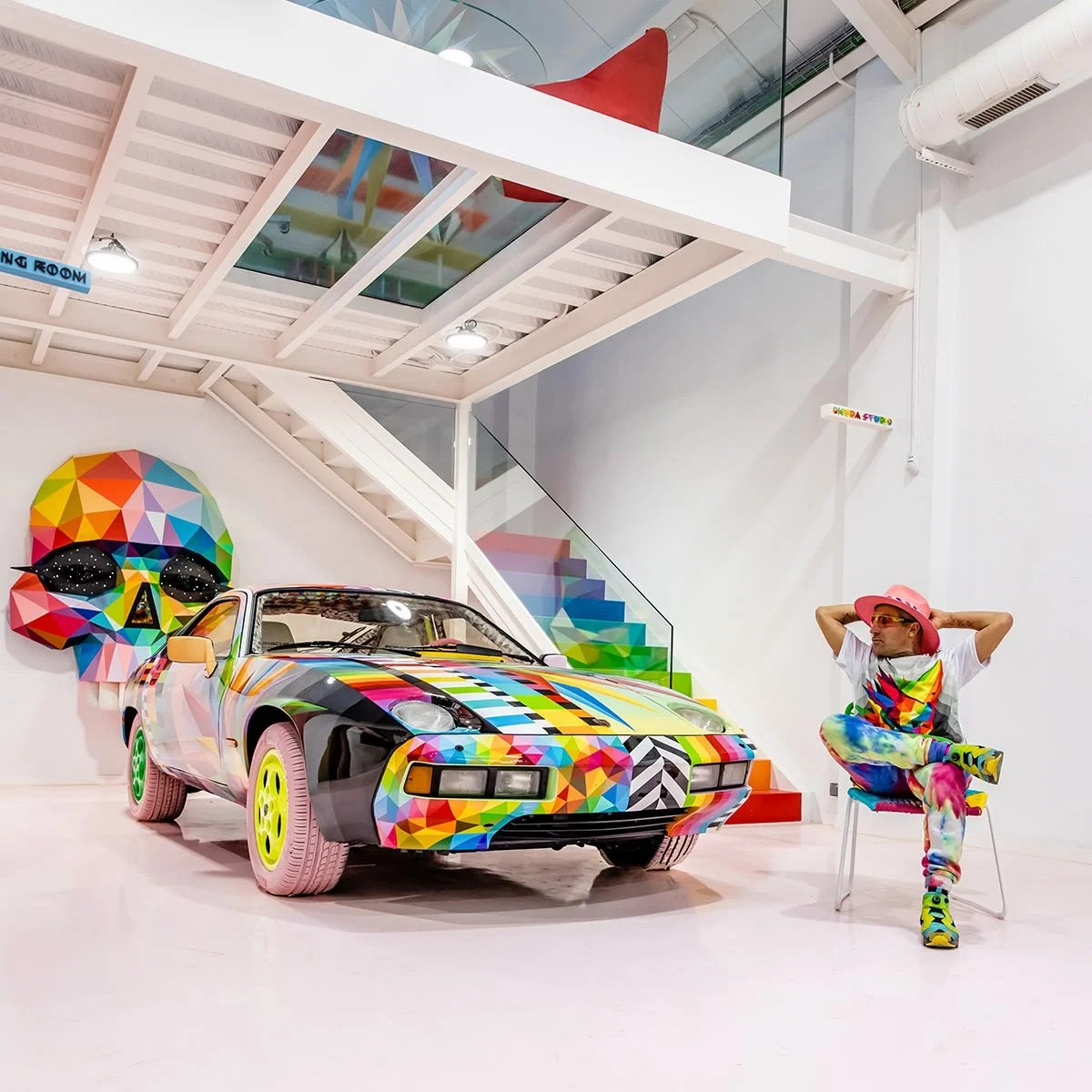
Around 2007 I started to transform my street letter forms into circles, triangles, and rhomboids. And then I mixed my street geometrics with my surrealistic works in the studio. I started to do my characters: humans, animals, and trees lost in geometric architectures and landscapes. Later on, I began changing everything at hand into geometric structures with different patterns and rainbow stripes. When I create a body or a face with my multi-coloured triangles I try to represent multiculturalism and diversity. And the gray parts represent capitalism.
Collaboration has played an important role in many of your projects, bringing together different creative perspectives and artistic voices. What do you enjoy most about the collaborative process, and are there any artists you would love to work with—or revisit a collaboration with—in the future?
Collaborations are always fun and I like to discover how my iconography and characters work with others. Usually, we surprise each other with these collabs. Some of the latest ones have been with the talented Samuel Salcedo, Waone, Charlie Immer, Felipe Pantone and Jose Luis Serzo. I try to keep doing that because you acquire a different perspective of your art. I have some new collabs in mind with artists like Dan Lam.