

TYLER SHIELDS INTERVIEW
““People want the impossible from you and you just have to give it to them.””
I dig how fearless your work feels. You push boundaries, do your own thing, and don't seem interested in pleasing anyone but yourself. Has there ever been pressure to compromise your vision, or have you always trusted your gut?
When people ask me what the hardest part of doing this is I tell them it’s not making the work, that’s easy and a lot of fun. The tricky part that I have seen break people is: Can you stay true to what you want to do and not let critics press, or even people break you? And I’ve seen that happen to friends, especially now with social media and Instagram. People are changing the work they make for likes and that’s a dangerous game to play as an artist. I have just always been the way I am. I think when I started people called me stubborn but I never wanted to compromise and I think it’s a great question and it’s important for people to hear the marathon is much more rewarding than the sprint. People made it very tough for me. It was no easy task but I never questioned it. I suppose I just didn’t know any other way to do it.
Your work is unapologetically provocative and never fails to spark conversation. Looking back, which shoot pushed the boundaries the furthest—and generated the strongest reaction?
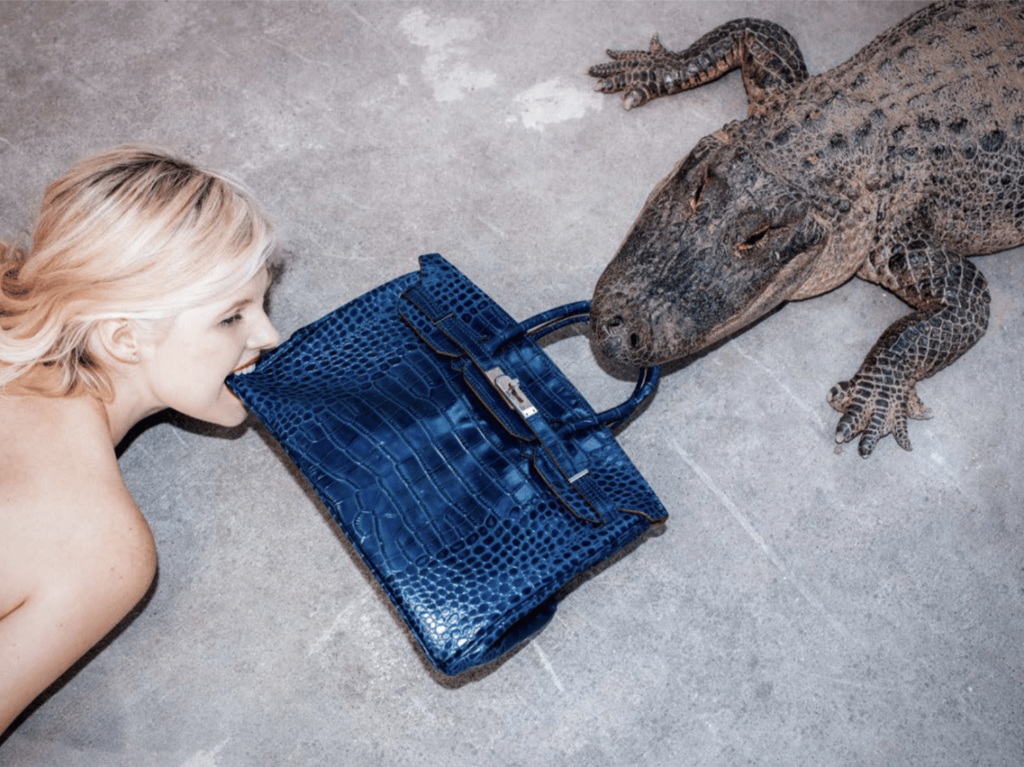
Oh man that’s a tough question because that really comes down to the viewer. Some people would say the lynching photo and some people would say the gator Birkin, but I can’t call it because you never know what will be seen as controversial. I don’t like to tell people what to think about something. I like to make it and let them make up their own mind. That’s part of the fun. My opinion doesnt matter because I made it.
Your imagination and creative vision appear boundless. Walk us through your creative process—where do your ideas begin, what fuels your inspiration, and do you have any muses that continue to influence your work?
There’s a few people I work with a lot, Ana Mulvoy-Ten, Page Ruth, Emma Roberts, Logan Huffman and Holland Roden. They have all been in my last few series. The ideas just come and the challenge is settling on an idea and learning how to master it, but that’s also part of the fun. You get to learn so much. The amount of research I did for “Historical Fiction” was insane, but that’s part of the fun. You get to play in different worlds and create them. Had I not done the “Historical Fiction” series, I would have never done the “Decadence” series and one thing leads to the next, but you experiment and you grow and you just keep learning. That’s one of the things that I try to get all my friends to do, is try new cameras and experiment with new techniques.
Your work often asks subjects to step far outside their comfort zones—from destructive acts to beautifully absurd performances. What's the most outrageous concept you've ever pitched? And in your experience, has anyone ever flat-out refused one of your ideas?
People trust me. Part of that is because they see the results. I have had a few times where the person I was shooting had no idea what they were doing and how it would look, but that’s part of the fun. You have to let go of reality. You have to let go of trying to figure out how my mind works and just trust me and people do that. I have been very fortunate to have some amazing people around me and in my work over the years. For the craziest, killing Hitler was a crazy one. Just finding someone who was willing to do it was hard enough, but being able to have Kick Gurry, such and incredible actor, bring something so magical to it was a year long dream come true.
The Dirty Side of Glamour is absolutely mind-blowing. It's unlike any photography book I've come across. What inspired the project, and how did the concept evolve? Do you have a favorite image from the book, or one that holds special significance for you?
A favorite? I don’t know. It’s hard to pick favorites as they are like children to me. “The Champagne Kiss” has taken on a life of its own. It’s funny because it started out as a series and then turned into a whole book. It took about five years to complete, but what’s really fascinating to me about it is that people seem to like it even more now than when it came out, which is interesting because Emma told me that would happen when we were putting it together.
Seeing work like yours is incredibly inspiring—it makes people want to pick up a camera and start creating. For photographers who are just beginning their creative journey, what advice would you give? Are there any lessons you learned early on that you wish someone had shared with you?
It’s a marathon not a sprint. Make what you want to make and don’t make it for likes, or for what you think someone else might like because if you do that one day you will wake up and hate it all.
SHOP EDITOR PICKS
