

GUCCI STORIA
Gucci Storia opens at Palazzo Gucci in Florence as an immersive exhibition exploring 105 years of the House through archive, craft, cinema, tapestry, and Demna’s new vision.
In Florence, Gucci does not need to introduce itself. The city is already part of the House’s mythology — stitched into its luggage, its leatherwork, its codes of travel, and its ability to turn Italian craftsmanship into global desire. But with Gucci Storia, the Maison is not simply looking back at its origins. It is rebuilding them as an immersive world.
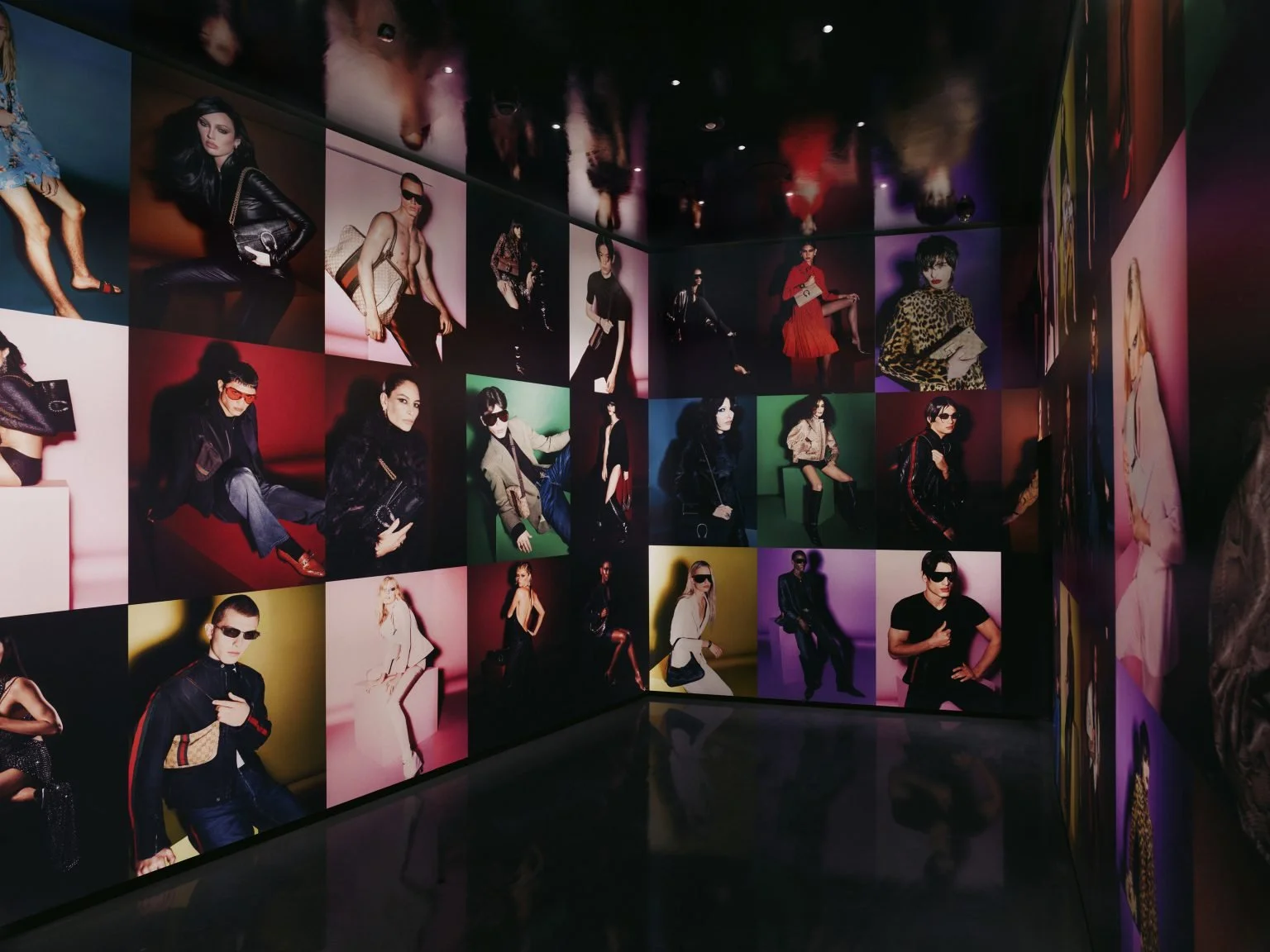
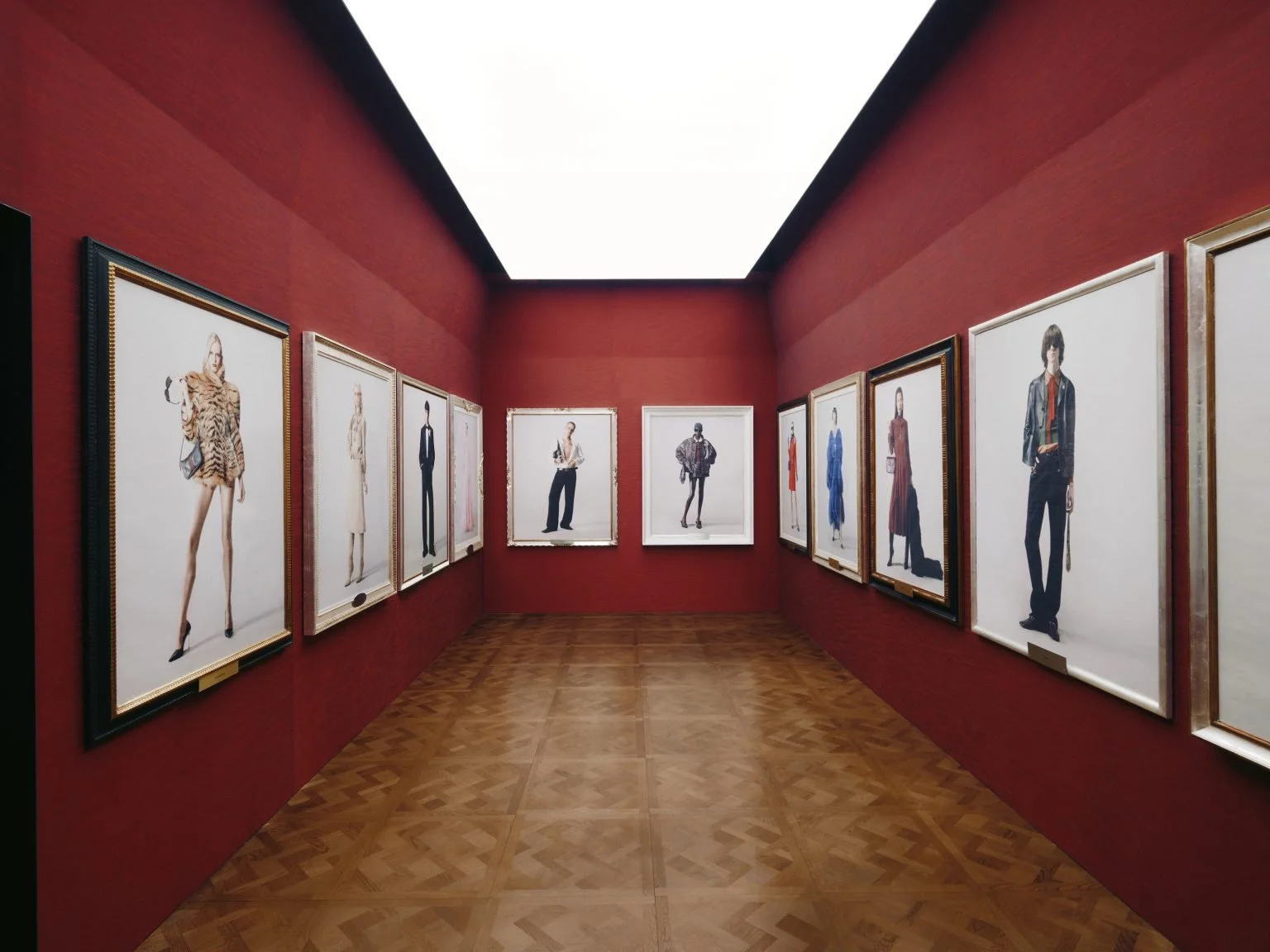
Opening at Palazzo Gucci in Florence, Gucci Storia marks a new cultural chapter for the House: part exhibition, part archive, part cinematic experience. Set inside the historic Palazzo della Mercanzia in Piazza della Signoria, the project explores 105 years of Gucci through a layered journey of archival objects, monumental tapestries, portraiture, cinema, craftsmanship, and interactive environments.
Rather than presenting a predictable museum timeline, Gucci Storia treats the archive as something alive. Memory is not fixed here. It moves. It folds. It contradicts itself. It becomes atmosphere.
For COUTEUR, what makes Gucci Storia compelling is not only the access to Gucci’s history, but the way the exhibition reflects fashion’s current obsession with world-building. Luxury houses are no longer simply presenting collections; they are creating cultural ecosystems. Gucci Storia understands this perfectly. It treats heritage as a living language — one that can be entered, questioned, edited, and reimagined.
HERITAGE, BUT MAKE IT CINEMATIC
Under the artistic direction of Demna, Gucci Storia feels less like a traditional retrospective and more like a cinematic reconstruction of the House’s identity. Gucci’s past is not placed quietly behind glass. It is staged, enlarged, fragmented, and transformed into a series of immersive rooms that invite the visitor to move through the brand’s mythology rather than simply observe it.
This approach feels especially relevant for Gucci now. The House has always been built on powerful symbols: the Bamboo handle, the Horsebit, the Jackie bag, the GG canvas, the Flora motif, the Savoy connection, and the jet-set fantasy that turned luggage into lifestyle. Across decades, Gucci has also absorbed the heat of Tom Ford, the romantic maximalism of Alessandro Michele, the sleek reset of Sabato De Sarno, and now Demna’s sharp, almost archaeological instinct for fashion as cultural theatre.
Gucci Storia does not flatten these eras into nostalgia. Instead, it allows them to coexist. The result is a more provocative question: what does Gucci become when its entire history is treated as creative material?
THE FABRIC OF TIME
One of the exhibition’s most striking gestures is its use of tapestry. Through The Fabric of Time, Gucci’s story is translated into large-scale textile works that connect the House’s 105-year history with Florence’s deep tradition of craft, ornament, and visual storytelling.
It is an intelligent opening language for a brand like Gucci. Tapestry carries the weight of history, but it is also constructed from threads — individual fragments woven together to create a larger image. In that sense, it becomes the perfect metaphor for Gucci itself. The House has never been defined by a single era or object. It has been built through accumulation: travel, leather, celebrity, sensuality, aristocracy, pop culture, excess, restraint, provocation, and reinvention.
In Gucci Storia, the thread becomes timeline. Ornament becomes evidence. The past is not merely remembered; it is rewoven.
THE ARCHIVE AS A LIVING OBJECT
The most interesting fashion archives are never just collections of things. They are maps of desire. They reveal what a House has chosen to repeat, protect, exaggerate, and abandon.
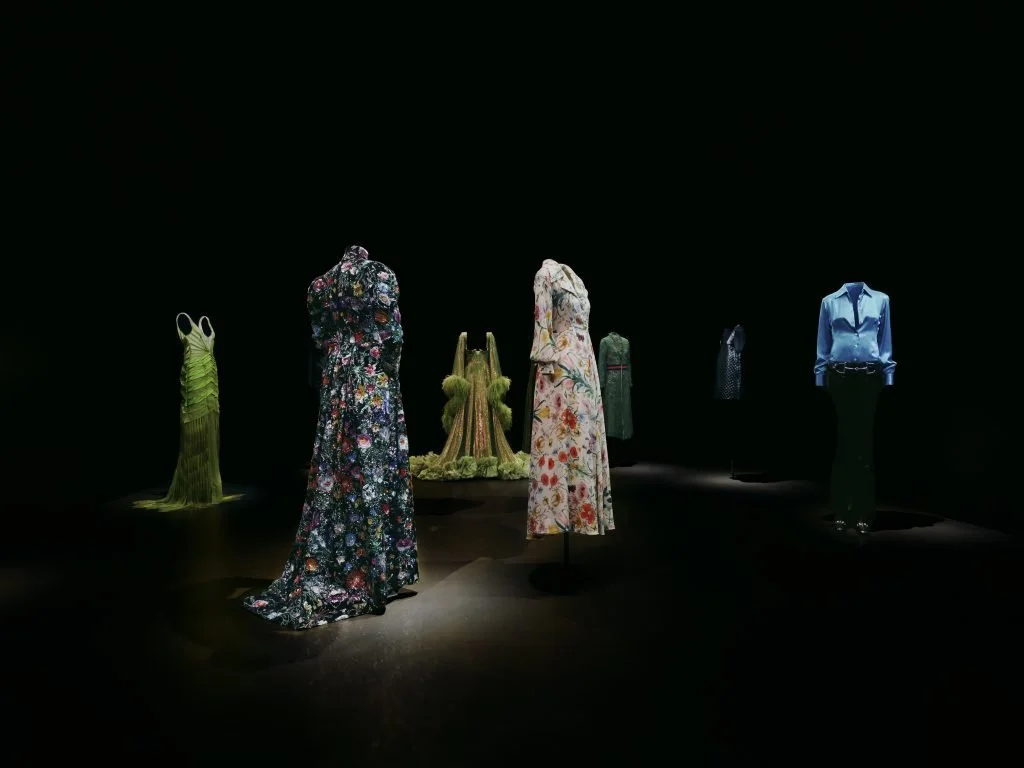
Gucci Storia understands this. Archival objects are not treated as silent relics. They appear as clues inside a broader narrative — accessories, garments, bags, scarves, and unexpected design fragments that show how Gucci’s identity has always been built through both glamour and utility.
This is where the exhibition becomes most contemporary. In the age of viral fashion history, archival storytelling can easily become flat content. Gucci Storia pushes against that by making the archive spatial. Visitors do not just look at Gucci’s past. They move through it.
That movement matters. It suggests that fashion history is not one clean line from origin to present. It is a set of rooms, moods, objects, edits, and returns. It is what gets remembered, what gets reissued, what gets mythologized, and what suddenly becomes relevant again.
WHAT MAKES SOMETHING “GUCCI”?
Every major fashion house has codes, but Gucci has something more slippery: a feeling. “Gucciness” has always been difficult to define because it thrives on contradiction. It can be aristocratic and vulgar, polished and eccentric, classic and outrageous, sensual and strange. It can live in a loafer, a silk scarf, a red carpet gown, a monogrammed suitcase, or a campaign image that feels like a dream with a credit limit.
Gucci Storia leans into that complexity. Instead of reducing the brand to a list of icons, the exhibition explores Gucci as a collective identity — one shaped by designers, artisans, muses, clients, photographers, celebrities, and the many people who have projected themselves into the House’s visual language.
That is why the exhibition feels larger than a brand archive. It is also a study in how luxury becomes culture.
DEMNA AND THE ART OF REINTERPRETATION
Demna’s presence gives Gucci Storia its edge. His work has always been interested in systems: the codes of luxury, the performance of status, the emotional charge of clothing, and the way fashion can absorb the ordinary and return it as spectacle.
At Gucci, that instinct becomes especially fascinating. The House is already loaded with symbols. Demna does not need to invent a mythology from scratch; he has inherited one of fashion’s richest archives. The challenge is how to touch that history without embalming it.
Gucci Storia suggests one answer: do not preserve the past too politely. Activate it.
The exhibition does not feel like a shrine. It feels like an edit. It asks what should be emphasized, what should be destabilized, and what still has power when placed in a new context. This is not heritage as decoration. It is heritage as raw material.
PALAZZO GUCCI AS A CULTURAL DESTINATION
The choice of Florence is essential. Gucci’s connection to the city is not simply biographical; it is foundational. Florence gives the House its sense of craft, its relationship to leather, its architectural romance, and its proximity to Renaissance ideas of beauty, commerce, and patronage.
By situating Gucci Storia inside Palazzo Gucci, the Maison transforms the space into more than a boutique or brand landmark. It becomes a cultural destination — a place where retail, archive, hospitality, exhibition-making, and fashion mythology overlap.
This is increasingly the future of luxury. The flagship store is no longer enough. The modern House needs a world: a restaurant, a museum, a digital universe, a permanent archive, a collectible experience, and a reason for people to travel toward the brand rather than simply shop it.
Gucci Storia fits perfectly into that shift. It gives visitors a reason to encounter Gucci as culture first and product second.
WHY GUCCI STORIA MATTERS NOW
Gucci Storia arrives at a pivotal moment for the House. Demna’s Gucci is still unfolding, and the brand is entering a new era in which heritage must be handled with both intelligence and risk. Too much nostalgia can make a House feel frozen. Too much disruption can make it feel disconnected from itself.
The brilliance of Gucci Storia is that it does not choose between reverence and reinvention. It allows both to exist at once.
The exhibition recognizes that Gucci’s power has never come from purity. It has come from transformation. A bamboo handle born from material limitation becomes an icon. A horsebit becomes modern elegance. A scarf becomes a legend. A logo becomes a global language. A palazzo becomes a portal.
With Gucci Storia, the House does not simply invite visitors to look back. It invites them to step inside the story while it is still being written.
And perhaps that is the most Gucci gesture of all: to treat the past not as a museum piece, but as a mirror ball — fractured, reflective, theatrical, and always catching new light.