

“WHAT WE LEAVE BEHIND” HERA & CASE MACLAIM
““Whether you express yourself on canvas, a wall, a postcard, or a post-it, what matters is that it resonates, with the hope of planting seeds that may grow and sprout.””
A rare and compelling dialogue unfolds in What We Leave Behind, a duo exhibition bringing together two internationally celebrated urban artists whose practices have evolved side by side for years while remaining visually and emotionally distinct. For the first time, Hera of Herakut and Case Maclaim present a joint exhibition built around a shared theme, revealing how two singular voices can approach memory, vulnerability, and human experience from entirely different artistic directions.
This is not simply a pairing of two established names in contemporary urban art. It is a layered encounter between two artists whose histories are intertwined through creative growth, family life, influence, and a mutual witnessing of each other’s development. The result is an exhibition that feels both intimate and expansive, rooted in personal history while speaking to broader questions about what remains after moments pass, cities change, and images weather over time.
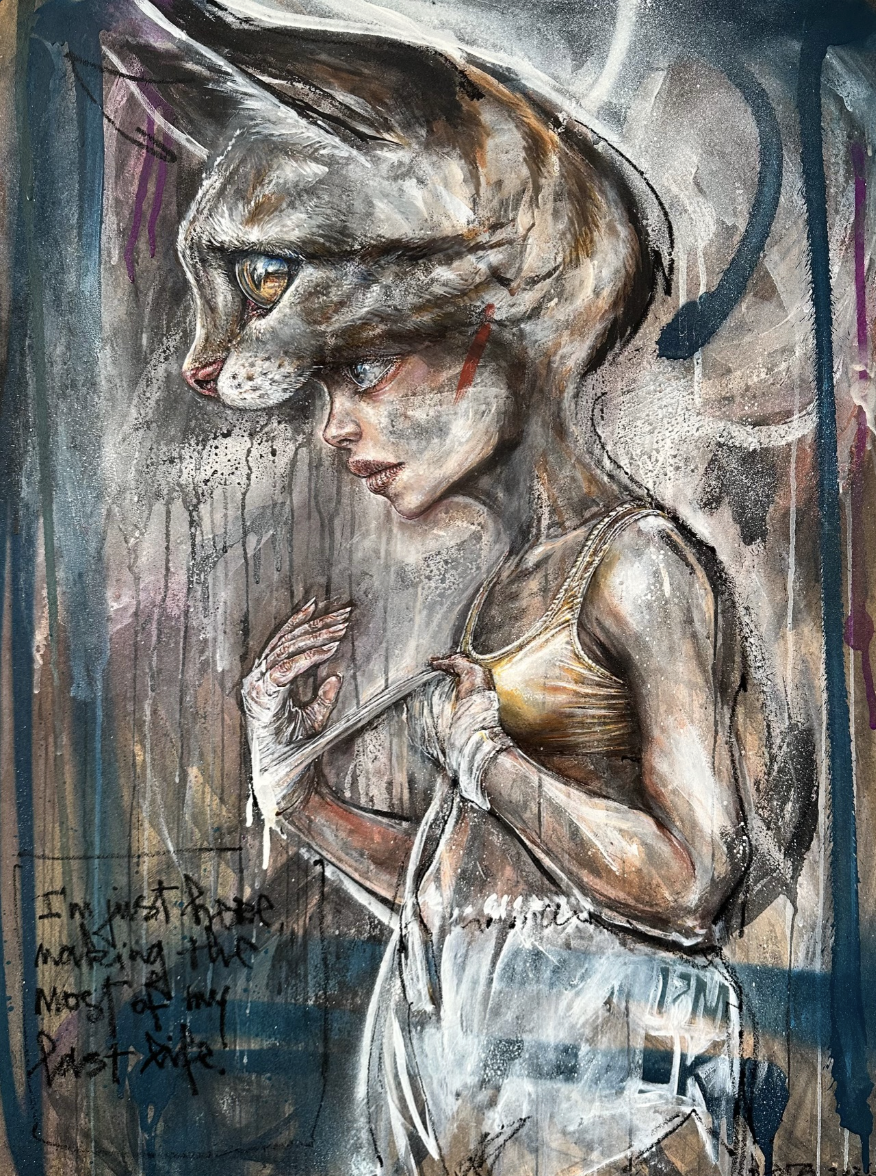
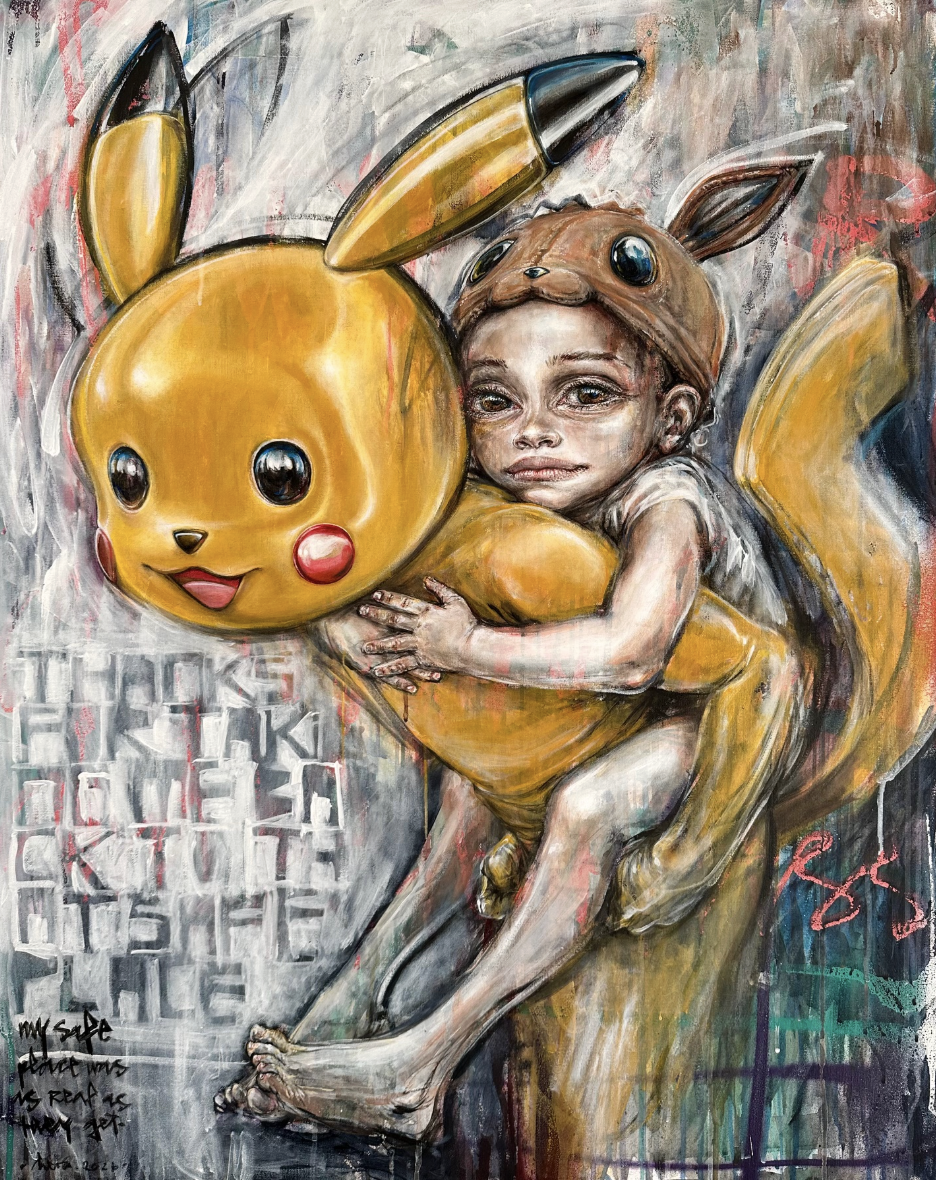
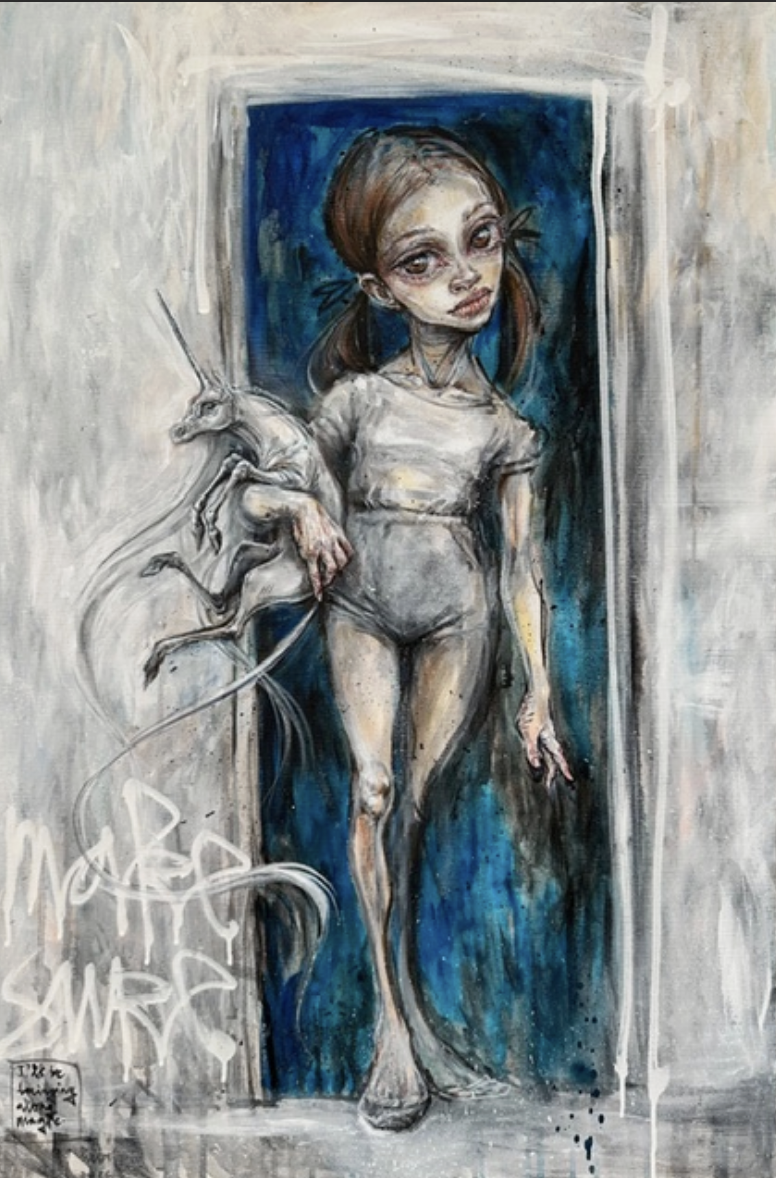
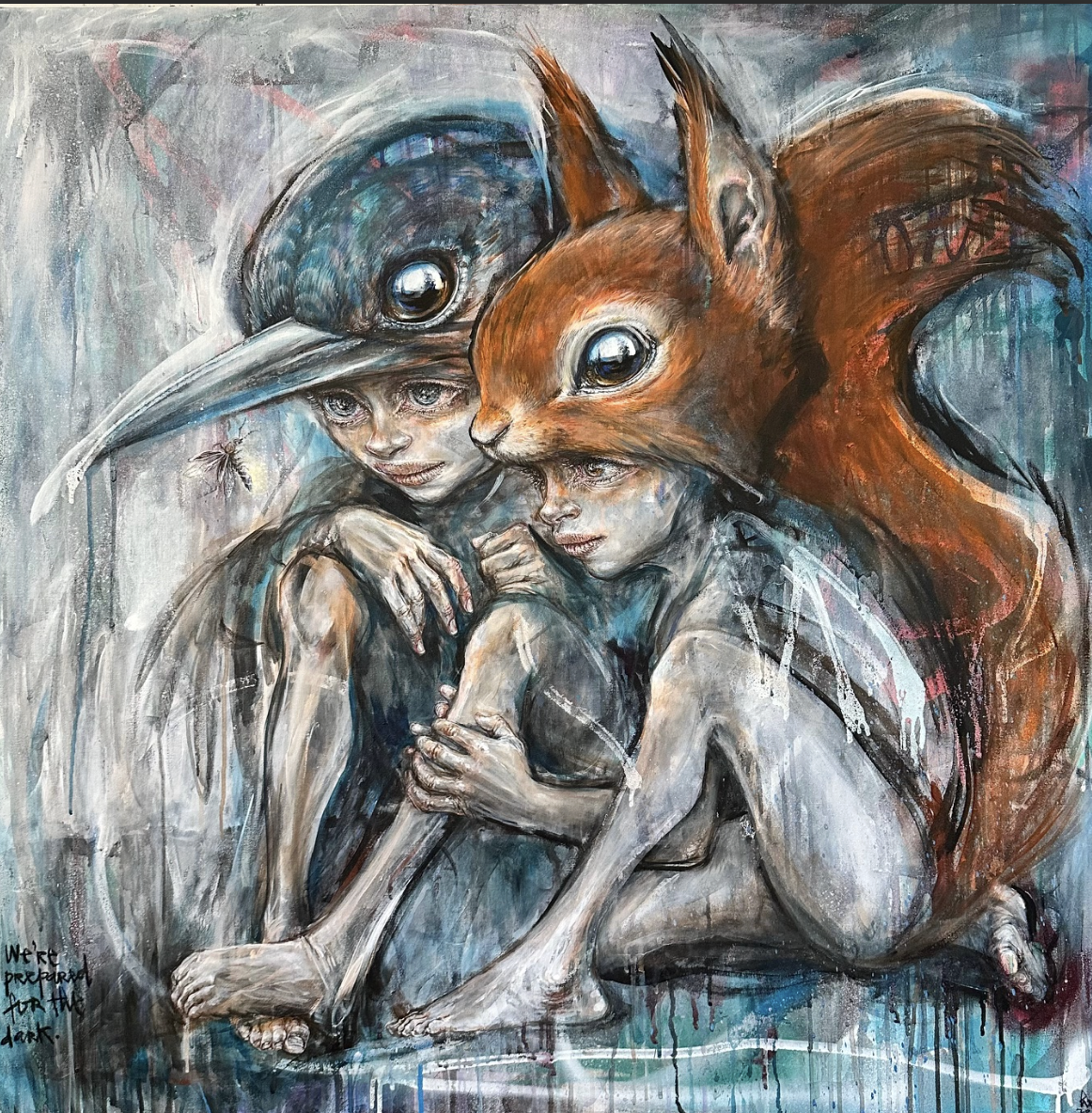
Hera brings to the exhibition her unmistakable poetic universe, one that has long captivated audiences on walls, in galleries, and in museums around the world. Her work often moves through a dreamlike territory populated by figures that feel both tender and psychologically complex. Human emotions are filtered through childlike wonder, social tension, and symbolic references that frequently draw from the animal world. There is an immediacy to her line work that feels raw yet deeply sensual, giving form to characters caught between innocence and awareness, hope and fracture.
In Hera’s work, the emotional charge often arrives through contrast. Her painted worlds may initially appear whimsical, but they carry the weight of social divisions, relational longing, and the internal negotiations that shape the human condition. Language has also long played a central role in her practice, with text functioning not as explanation but as emotional architecture. Her phrases and reflections linger inside the image, amplifying its intimacy.
““What We Leave Behind” is about the things that remain when moments disappear in families, in cities, and in walls.””
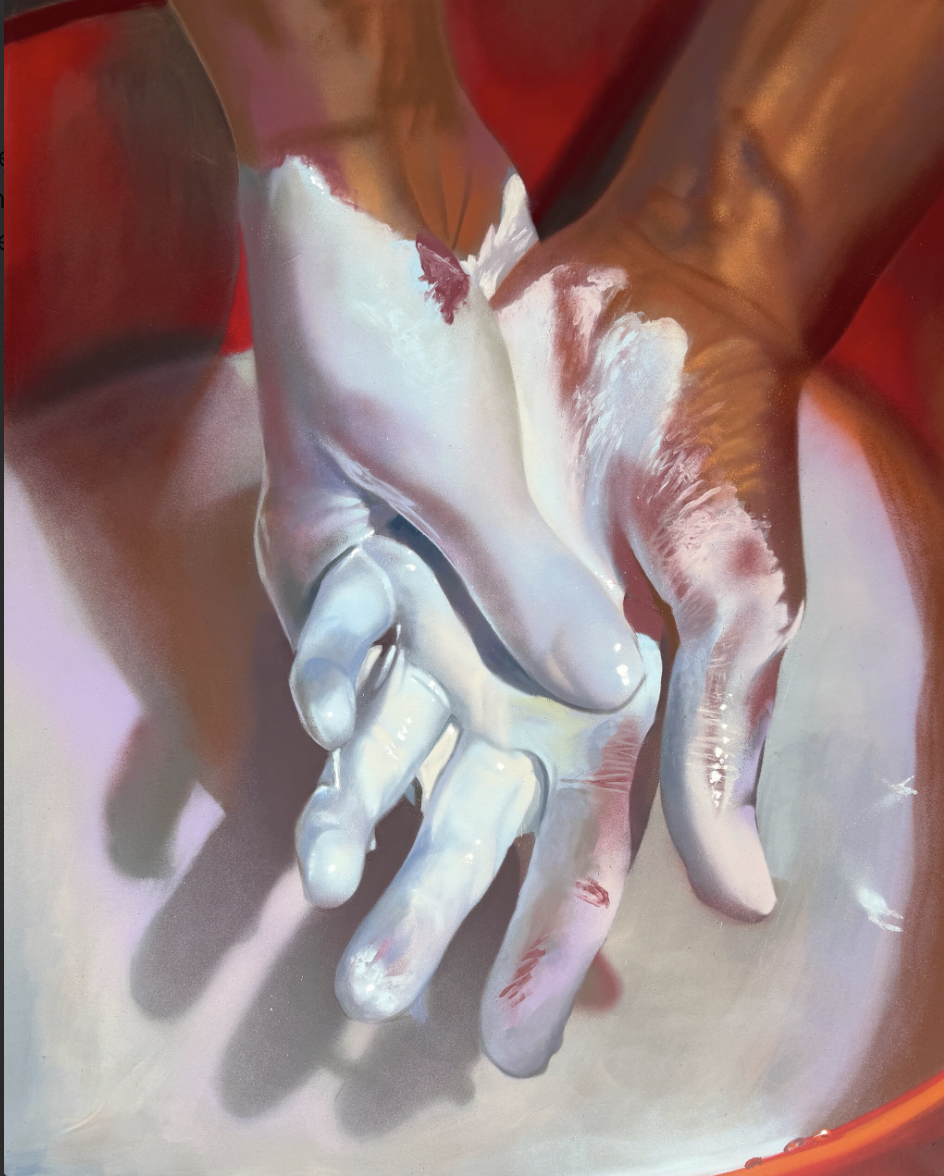
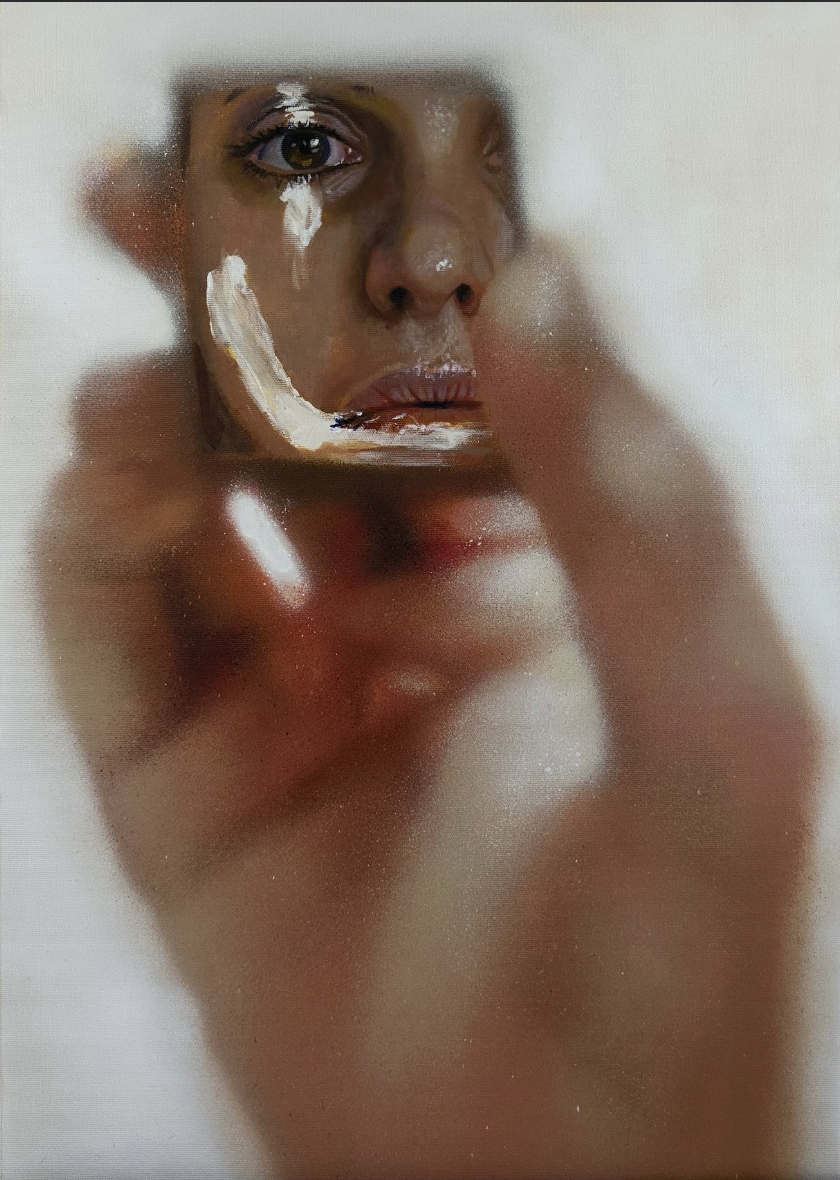
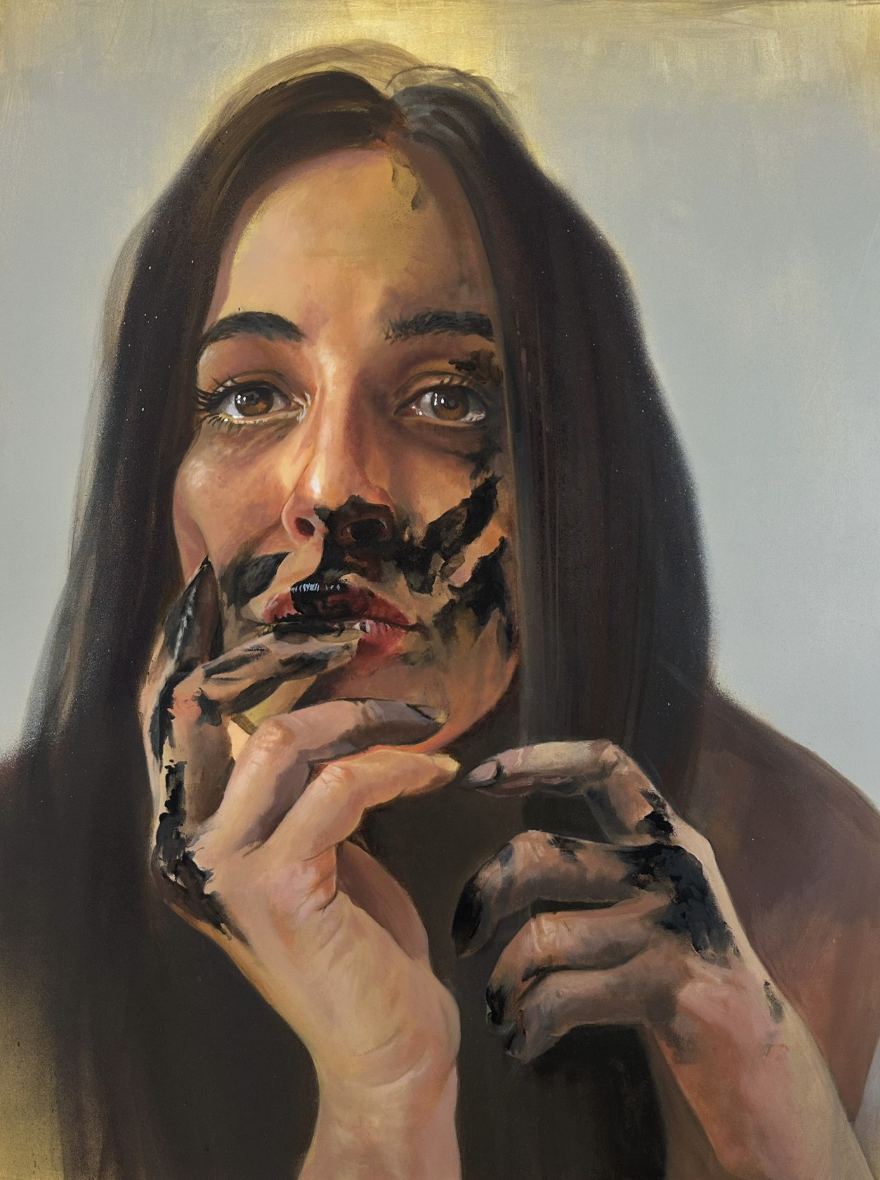
Case Maclaim enters the exhibition from a markedly different visual register. Widely regarded as one of the leading photorealists in urban art, he is known for his technically refined figurative works and his ability to infuse realism with quiet surrealist tension. His paintings and murals are often striking in their precision, yet they resist cold perfection. Instead, they open into emotional terrain shaped by melancholy, fragility, ambiguity, and the ongoing strain of being human.
Where Hera leans into narrative distortion and symbolic psychology, Case Maclaim works through the power of surface, gesture, and atmosphere. His images often feel suspended between presence and disappearance, as though each figure or fragment is carrying the residue of a larger untold story. That sense of emotional afterimage is central to What We Leave Behind.
The exhibition’s title speaks directly to this idea of residue. It asks what remains when time moves forward: what is left in families, in walls, in urban memory, and in the selves we once inhabited. In Case Maclaim’s reflection on the exhibition, he describes a body of work shaped by murals and images that have already existed in public space, altered by weather, human contact, and time itself. Inside the gallery, those images return transformed. Removed from the street, they become quieter and more intimate, almost vulnerable. The gesture is significant. A mural in public space may feel monumental, but once translated into the interior context of a gallery, its emotional texture can shift dramatically.
That movement from exterior to interior, from public mark to private fragment, gives the exhibition much of its depth. What once belonged to the city becomes something closer to an archive of feeling. The wall is no longer only a site of visibility; it becomes a carrier of memory.
Hera’s contribution adds another dimension to this conversation. Reflecting on more than two decades of painting in public space, she points to the extraordinary arc of urban art itself, from subcultural expression to global visibility. What began as spray-painted thought in the margins has become an internationally recognized language, one capable of occupying major walls in some of the world’s busiest cities. Yet her perspective remains grounded in something more essential than scale or recognition. For Hera, the true power of the work lies not in whether it exists on canvas, concrete, postcard, or paper, but in whether it resonates deeply enough to plant something lasting in the viewer.
That philosophy gives What We Leave Behind an especially resonant core. This exhibition is not preoccupied with spectacle, even though both artists have long proven their command of scale. Instead, it centers on transmission: what an image carries, what a mark remembers, what remains emotionally legible after the moment of creation has passed.
In a time when urban art continues to expand its place within contemporary culture, What We Leave Behind feels especially timely. It reflects a mature phase in the trajectory of street-informed practices, where the conversation is no longer about legitimacy but about depth, legacy, and emotional precision. Hera and Case Maclaim are not simply bringing street art into the gallery; they are showing how lived history, mural practice, and personal evolution can be translated into works that hold both immediacy and reflection.
The exhibition ultimately becomes a meditation on permanence and impermanence. Murals fade. Families change. Cities are rewritten. Artists evolve. Yet fragments remain, in surface, in memory, in gesture, and in feeling. That is the emotional terrain Hera and Case Maclaim navigate here with remarkable sensitivity.
What We Leave Behind stands as a powerful testament to the enduring force of urban art when it is driven not only by style, but by shared history, emotional intelligence, and the courage to transform what was once public into something profoundly intimate.