

DIOR’S GLASS GARDEN IN PARIS
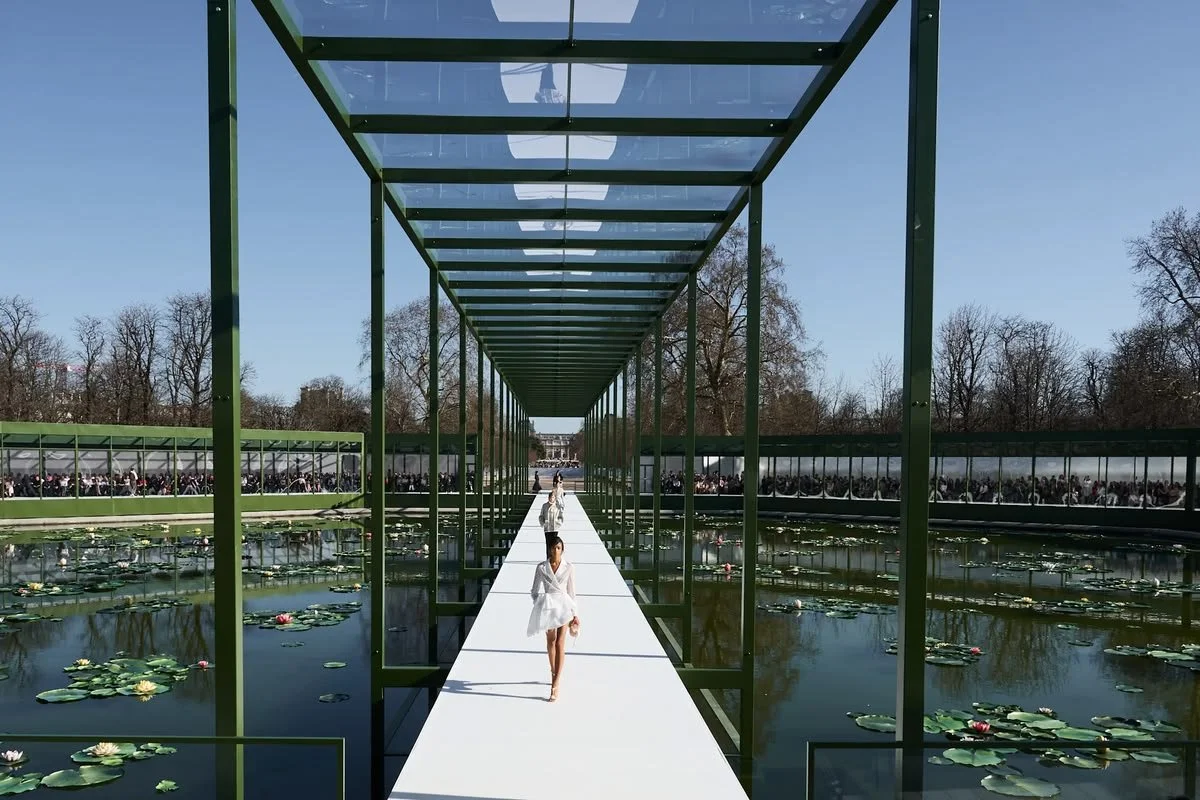
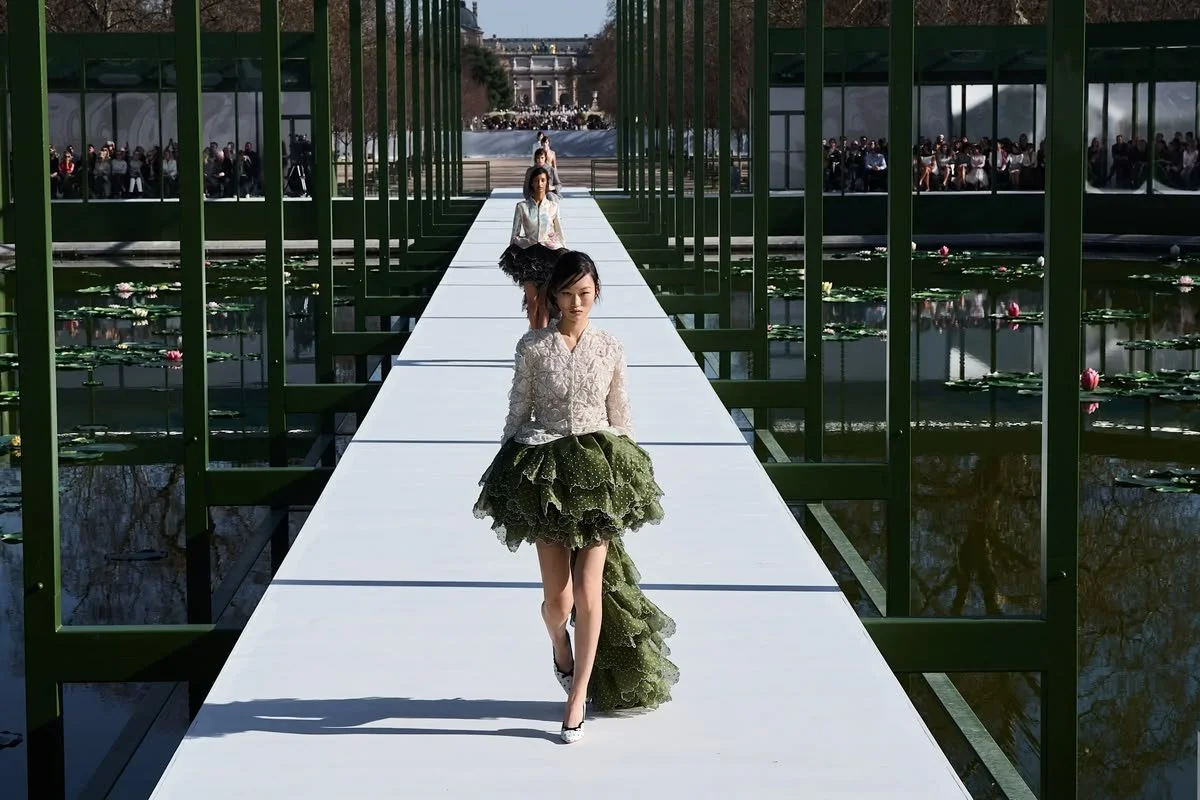
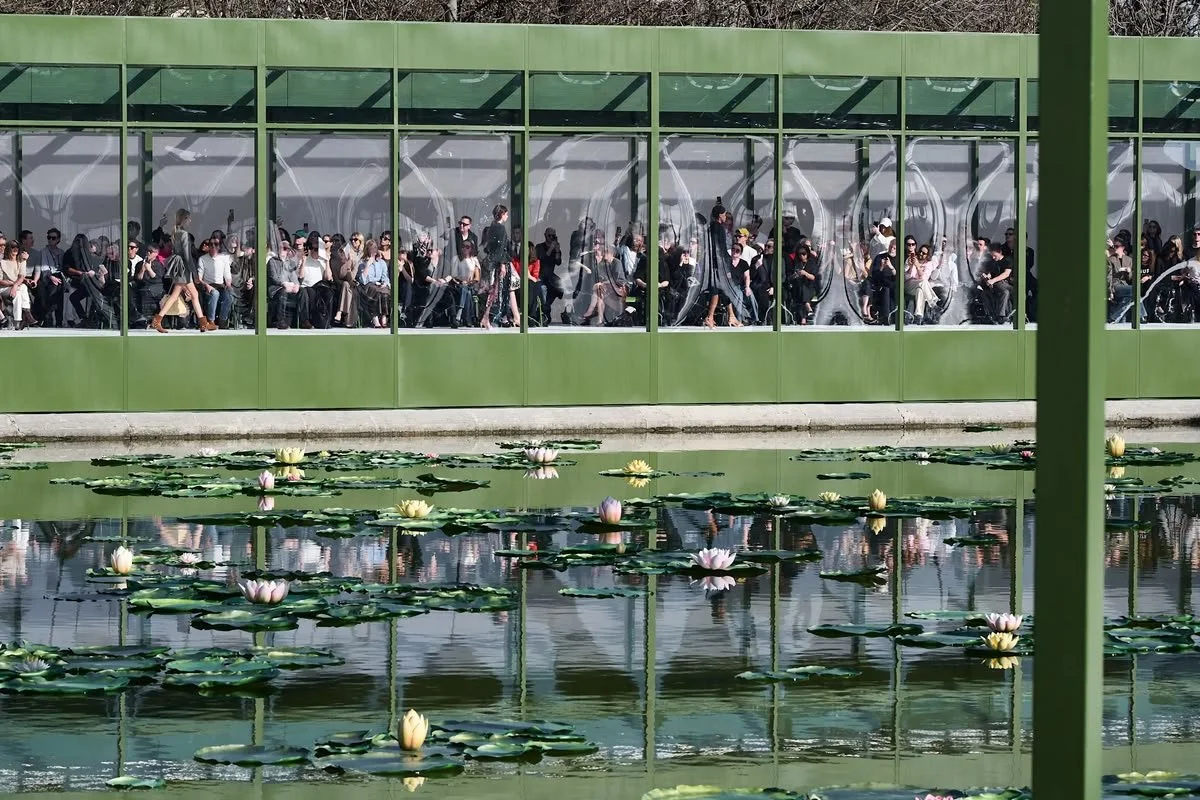
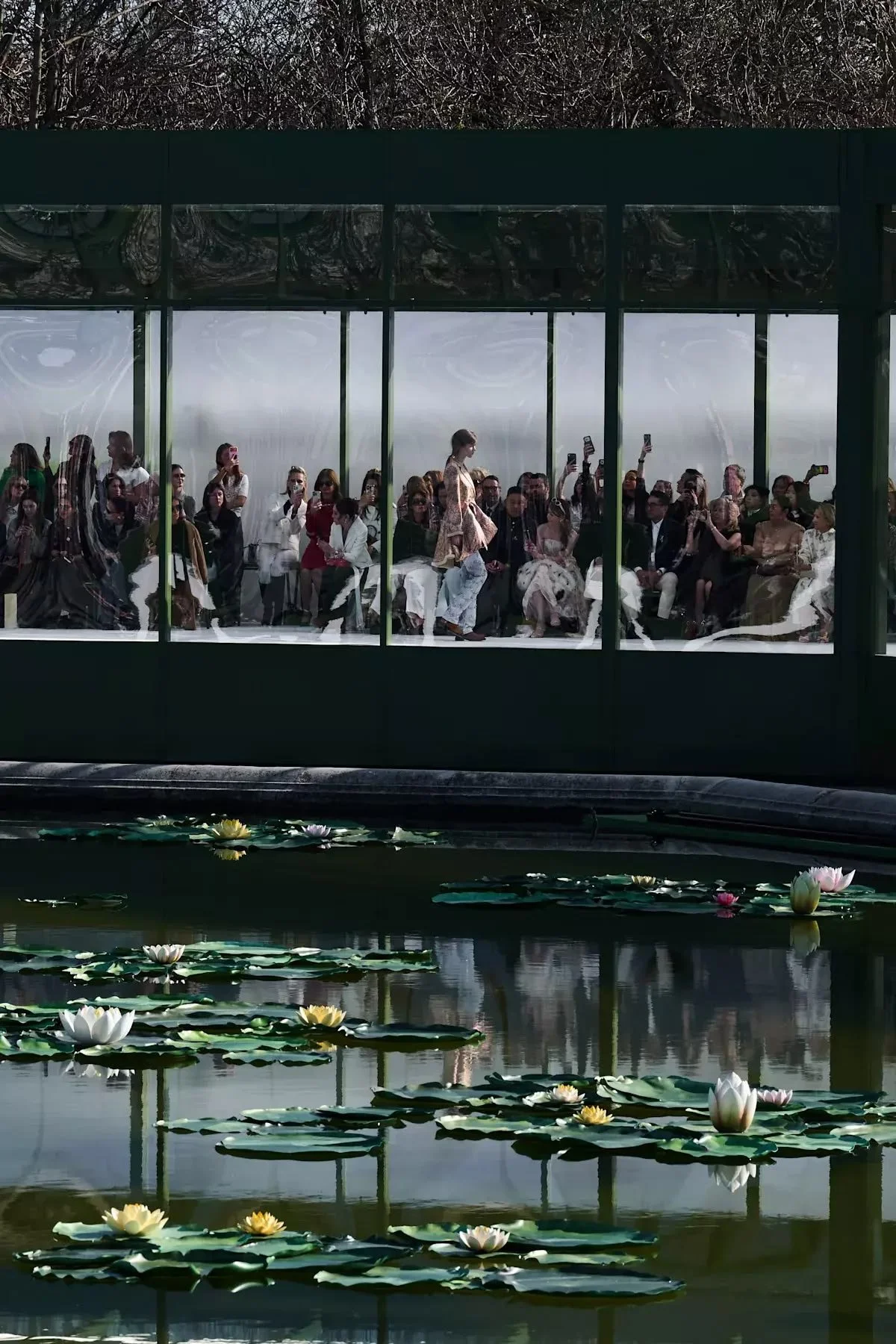
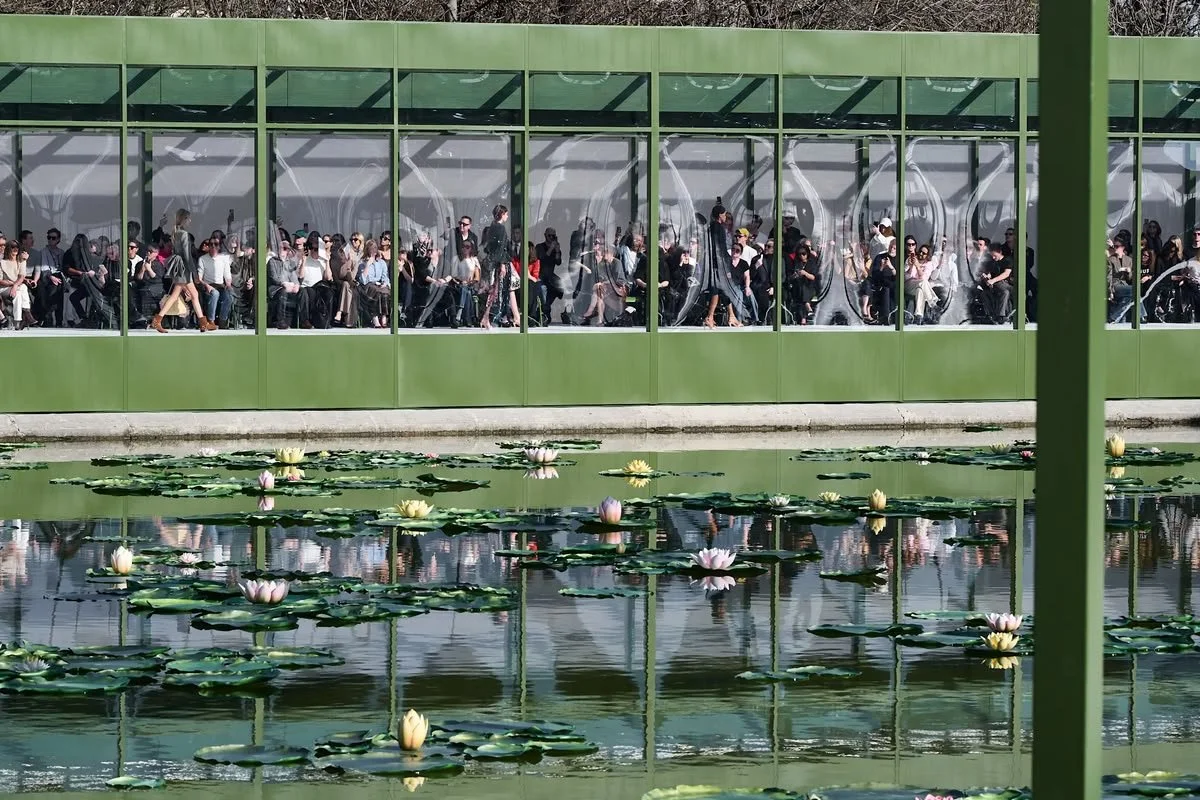
During Paris Fashion Week, the house of Dior transformed its runway space into something unexpected: a monumental glass garden constructed in the heart of Paris.
Installed inside the temporary show pavilion at the historic Jardin des Tuileries, the set resembled a luminous greenhouse — an architectural structure filled with greenery and filtered light that turned the runway into an immersive landscape.
While visually striking, the concept was deeply tied to the history of the brand.
Dior’s Long Relationship With Gardens
The connection between Dior and gardens dates back to the childhood of founder Christian Dior. Raised in Normandy, Dior spent much of his early life surrounded by the gardens of his family home in Granville. Flowers would later become one of the defining motifs of his couture collections.
From the earliest days of the house in 1947, floral references appeared throughout Dior’s work — in the structure of dresses, in embroidery, and in the names of silhouettes themselves. For Dior, the garden was not simply decoration; it was a foundational source of inspiration.
That heritage continues to influence how the brand presents its collections today.
A Runway Built Like a Conservatory
For this Paris presentation, Dior’s scenography team developed a space that felt closer to a botanical pavilion than a traditional runway. The installation was constructed using tall glass panels and metal framework reminiscent of classic European conservatories.
Inside, the runway was surrounded by dense arrangements of greenery and plants, creating the impression that the models were walking through a cultivated garden rather than a fashion show set. The transparency of the structure allowed light to move through the space, giving the entire environment an almost ethereal glow.
The effect was carefully balanced: architectural enough to feel modern, but organic enough to reflect Dior’s historical fascination with nature.
When Set Design Becomes Part of the Collection
In recent years, Dior has become known for transforming its Paris runway presentations into large-scale environments where scenography plays a central role in the storytelling of the collection.
Rather than a simple backdrop, the set becomes part of the narrative. The glass garden continued this approach, framing the clothes within a living landscape that echoed the delicate textures, botanical references, and romantic codes that have long defined the house.
Within the vast greenhouse structure, the runway unfolded slowly — a procession of silhouettes moving through what felt like a contemporary interpretation of a Dior garden.
Fashion Inside a Living Landscape
The glass garden ultimately served as more than just a dramatic setting. It was a reminder of how closely the identity of Dior remains tied to the natural world.
More than seventy years after Christian Dior first drew inspiration from flowers and cultivated landscapes, the house continues to revisit that origin story — not only in the clothes, but in the spaces where those clothes are revealed.
In Paris, for one evening, Dior didn’t just stage a runway. It built an entire garden around it.