

SARAH EMERSON INTERVIEW
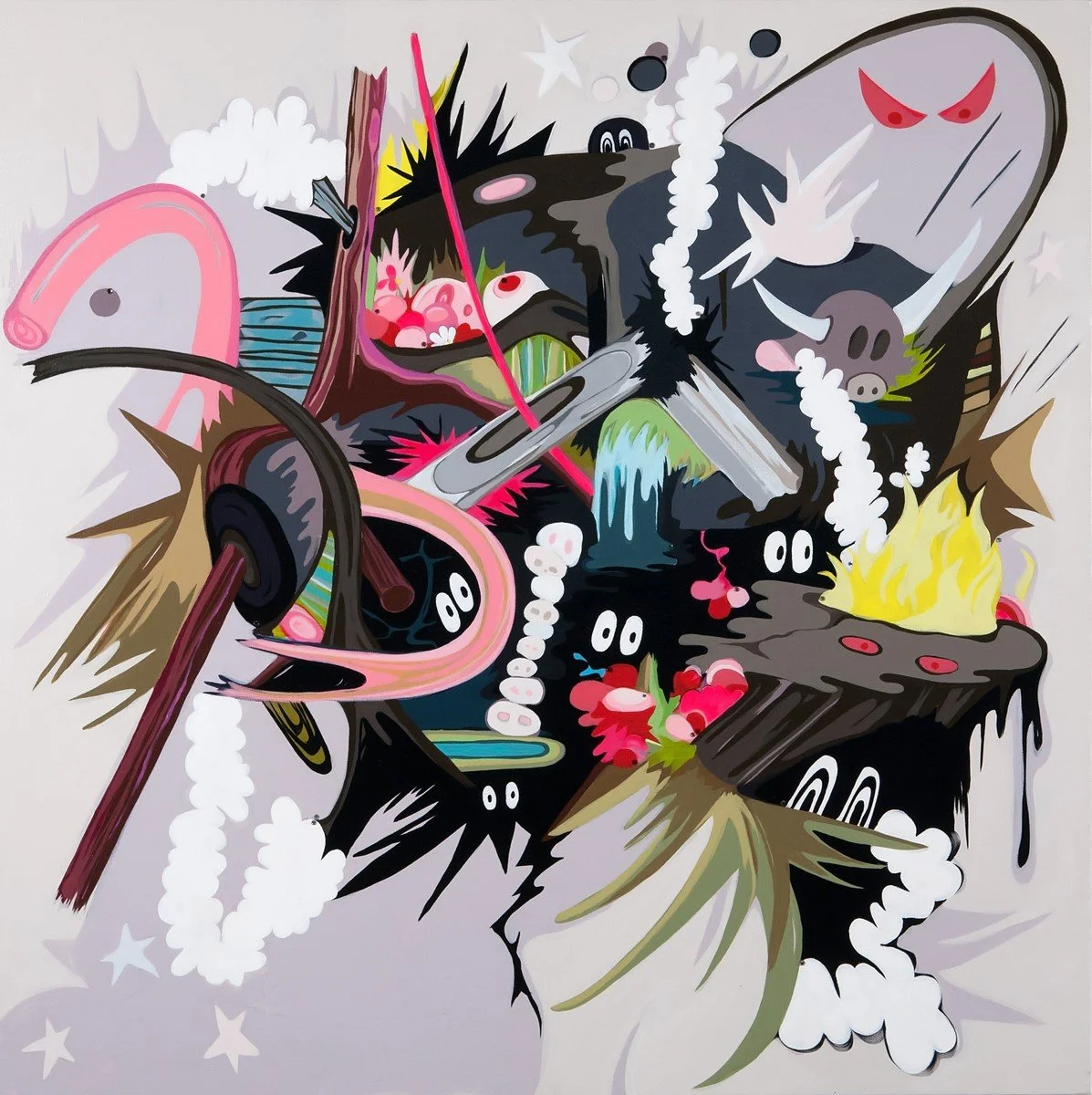
Your paintings possess a visual language that feels entirely your own—part dreamscape, part environmental narrative, part psychological landscape. How did your style evolve over time, and what does your creative process look like from concept to finished piece?
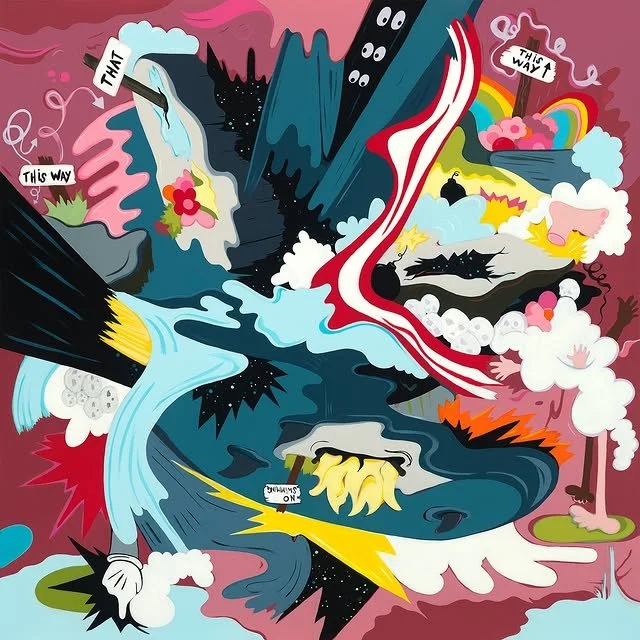
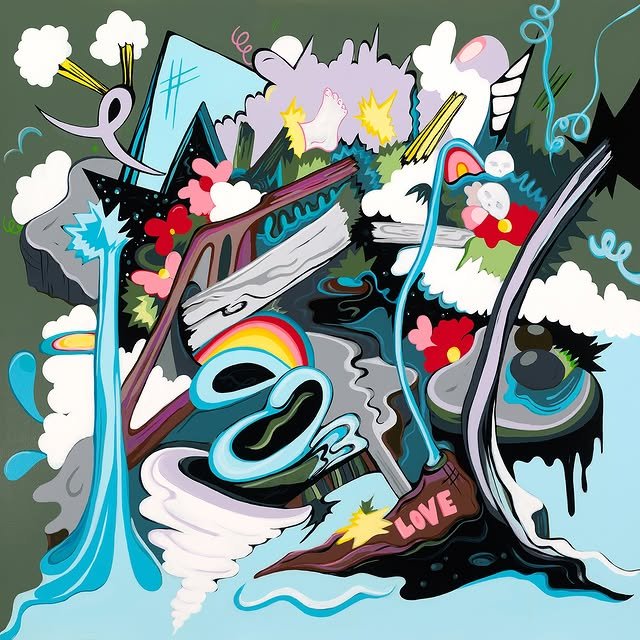
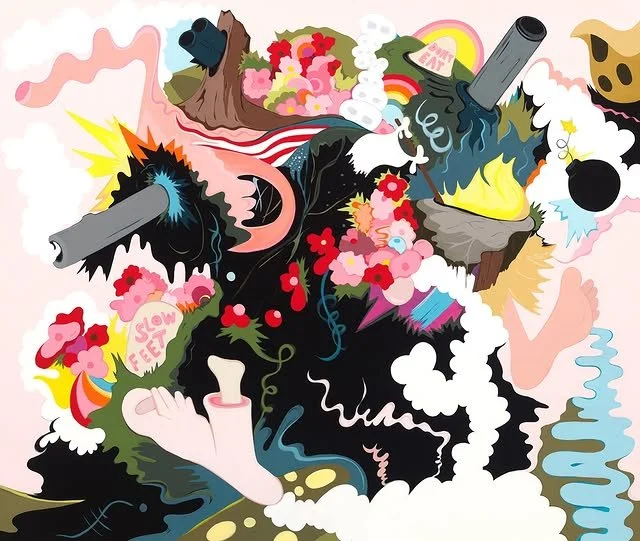
I never thought I would work as an artist, I went to college thinking I would do photo-journalism and then I was introduced to painting and drawing and it transformed the way I saw the world. Photo documentation and research is still a large part of how I produce my work but I’ve never had the patience or temperament to accept reality as it is. I do multiple drawings and layer them on top of each other to invent the compositions; I may go through many versions before I begin to paint. My images are abstracted and animated so I can manipulate resource material without completely obliterating the source. I’ll often use composition design theory so viewers subconsciously link individual paintings together or so I can create visual tension between real and flat space on canvas. The composition theory I use is always reinforced by my palette, either through contrasting black/dark spaces with bright colors or allowing colors to overlap multiple compositions. I don’t think much about style but I enjoy painting because it allows me to imagine many things existing at once on the surface, things that can be both beautiful and terrifying simultaneously. I suppose my style has developed through my personal effort to combine the psychological and the literal environment on one visual plane.
You formally studied art in London, yet your work feels deeply personal and continually evolving. How has your education influenced your practice, and in what ways have you seen your work transform throughout the years?
I have no idea what kind of work I would be making without my formal education or whether I would be more creative without it? I believe understanding your materials, context, and history can strengthen an artistic practice but a formal education can never substitute curiosity and I don’t think it’s necessary to be creative. All I know is that I continue to be curious about the ways art, but specifically, the medium of painting can flatten time and memory on the surface of a flat plane. I am reactive to current events so my paintings have shifted over the years in response to darker and brighter times in our collective discourse. Since my work is not representational, I can treat the landscape as an active participant in the human narrative, adapting and rearranging itself in response to natural phenomenon or human sprawl. In all my work, I use the camouflage of beautiful colors and a deliberate composition to present themes that reflect on the fragility of life, the futility of earthly pleasures, and the disintegration of our natural landscape. I continue to build this narrative but I am also following our contemporary story to build it.
As an artist who is constantly exploring new ideas and expanding her visual vocabulary, how do you approach the period after completing a major body of work? Do you embrace time for reflection, or are you already looking toward the next creative challenge?
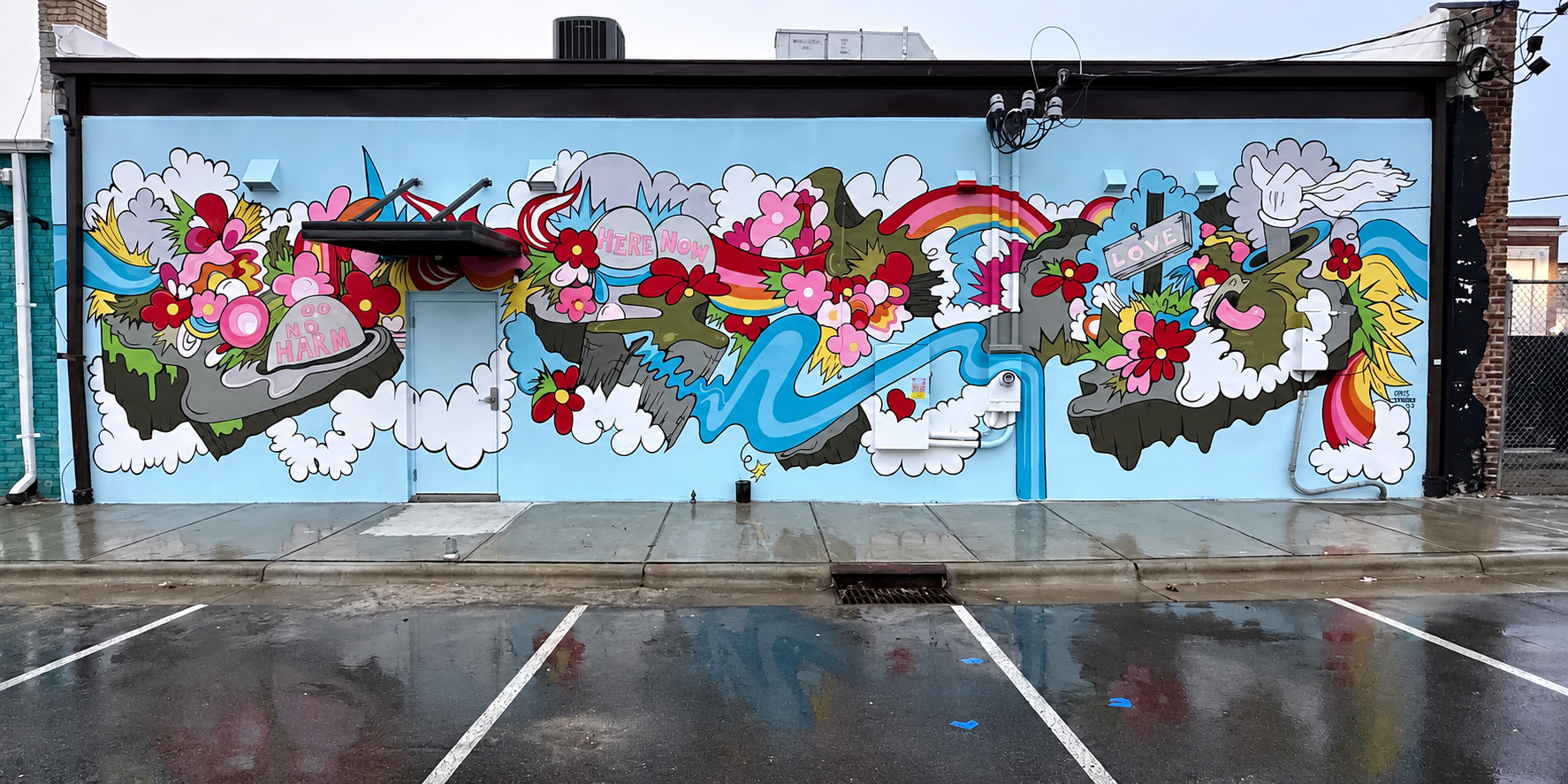
It’s always nice to take space for reflection, but I am also working on a solo show for the Zuckerman Museum in Kennesaw, GA that opens is January 2018. I’m excited to continue working on the ideas from “Ruin In Reverse” but in the format of drawings and murals for the ZMA show. I’m also working on a limited edition book that will be available during the exhibit.
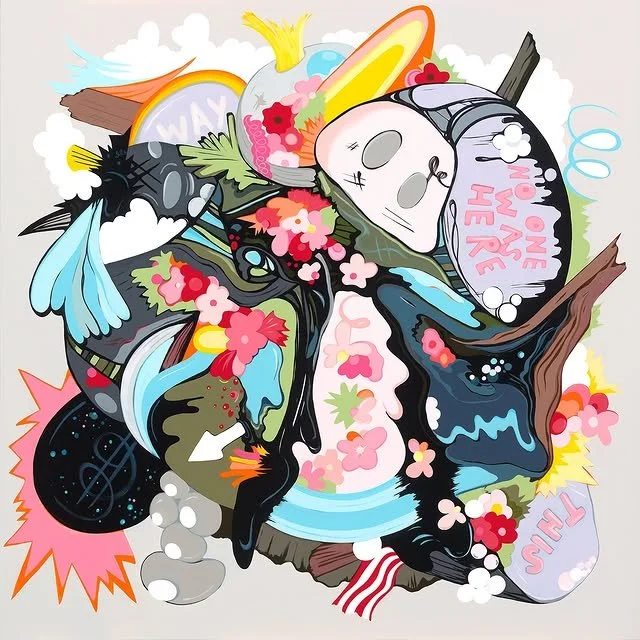
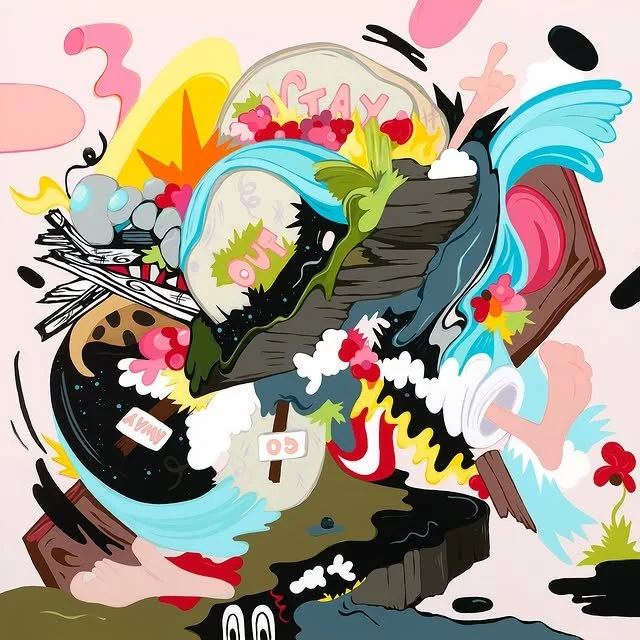
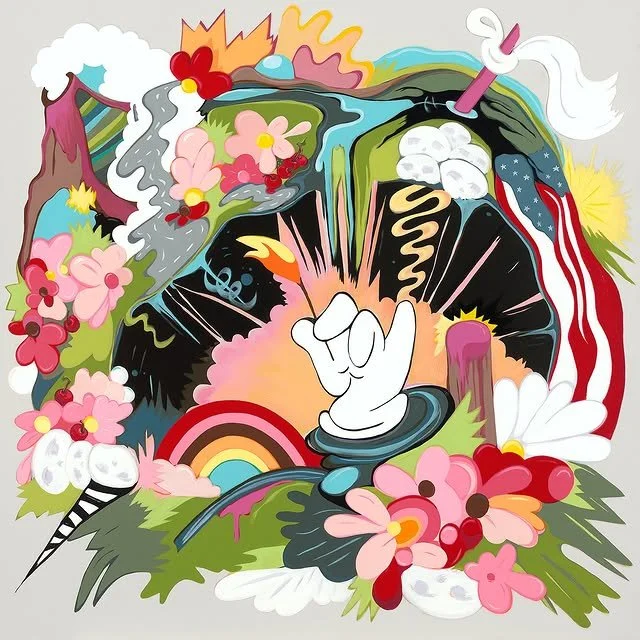
Your body of work often explores the tension between chaos and beauty, destruction and renewal. Looking back at your celebrated series Ruin In Reverse, what ideas and experiences were shaping your creative vision during that period of your artistic journey?
In the studio I am affected by the same news everyone else is listening to and some of that imagery gets into the work. Through different series and projects, I have responded to some large ecological disasters that have occurred in the last 15 years, events such as the BP oil spill and the 2011 Japanese Tsunami had a profound affect on my visual language. I often reference those events through recurring symbols and suggestive elements that show our horizon constantly cannibalizing and rearranging everything. Over the last few months, our political and physical environment seems to be defined by destructive expansion, consumption, violence, and chaos. In response to the uncertainty of our current environment, I chose to obliterate the horizon and imagine it redefined by a void that surrounds or penetrates the compositions. I rearranged and used many of the elements from my previous body of work to make this work and in many ways these new paintings are completely personal interpretations of a world defined by chaos, uncertainty, and polarization. I want to stay mindful to all of these issues but I also want to resist cynicism and hopelessness. Life is still beautiful in spite of the chaos; I am interested in how compassion, hope, and humor survives. In this work, I am trying to imagine that a more beautiful world can exist, where innocence and hope can survive in even the most hostile environment and circumstances.
The title Ruin In Reverse was inspired by ideas explored in George Musser’s book Spooky Action at a Distance, a fascinating examination of space, time, and interconnectedness. How did these concepts influence your thinking and ultimately find their way into your visual language?
I started reading Musser’s book because I am fascinated by spooky action at a distance and the idea of entanglement between two distant particles. Honestly, the theories in the book are beyond my comprehension, but the poetic description of black holes and the mysteries of entanglement altered the way I imagined my landscapes and inspired me to let go of the horizon line. My body of work explores the relationship between the inherent chaos of the natural world and the human instinct to control that chaos. In reality, our actions affect events beyond our immediate surroundings but sometimes we can’t see how our decisions affect the things we don’t see, we are limited by our personal horizon lines. I certainly don’t mean to oversimplify the concept of spooky action and nonlocality but it is more philosophical in my work. In consideration of how my work has evolved and the research that has driven my content, it makes sense for me to try to understand how all matter is connected in ruin and creation.
Throughout your work, viewers are often rewarded for slowing down and looking closer. Subtle details, unexpected textures, and carefully considered materials add another layer of discovery to your paintings. You've occasionally incorporated rhinestones into your work, creating moments that shift and transform with changing light. What draws you to these small but impactful additions, and what role do they play within your compositions?
The rhinestones are there to catch the viewer’s attention and move the eye around the canvas. I keep them subtle so you may not even realize they are there until the light catches one and then they glimmer like a tiny, shiny object on the surface.